Category Archives: Discipleship Series

Logically

So Jesus died for all our sins past, present and future. Therefore there can be no law against anything any more if it is all forgiven.

23 All things are lawful for me, but not all things are helpful; all things are lawful for me, but not all things edify. 

1 Corinthians 10:23

Logical.

But then why not go out and sin?  Because God knows that the response of a believing heart to the revelation of Jesus’ death is gratefulness and a desire to please Him (1 John 4:19).  Paul says we died to sin when Jesus died (Romans 6:1-11).  The revelation that God sent His Son to die for us works in our hearts automatically and we want to do what pleases Him (Romans 7:23).  We are wed to Him in a way and forever spoilt for anything else.

However in some ways we haven’t changed.  The old nature still wants to do the wrong thing (Romans 7:14-25).  So the answer is to offer ourselves, our every member, to God as a love slave to Him (Romans 12:1-2). Then He will show us what to do and He will work within us to will and to do according to His good pleasure (Philippians 2:12).


You cannot serve God and Mammon

The bible says, quite rightly of course, that money answers all things (Ecclesiastes 10:19). It also says that the love of it is the root of all evil (1 Timothy 6:10 KJV).

Jesus was completely unconcerned about having or not having money. He was supremely confident in His Father’s care and so wasn’t bothered when He ran out or who looked after His money. In Matthew 17:24-27 Jesus’ and Peter’s tax is due.

Every October I have to make sure I have enough money to pay the taxes that fall due on that day for the previous year. So I can imagine what it would be like to come to that day and not have a penny to give. But was He bothered?

No, first He says He and Peter shouldn’t be paying this tax anyway and secondly, a fish had swallowed a coin some time ago which He knew was available for them on the first bite of Peter’s line.

And then there was the small matter of who He told to look after His money – a thief who would betray Him – Judas (see John 12:6 and 13:29).

Oh, that I could be so trusting and so free from the love of money!

Tearing apart the Lion of Judah

Samson tore apart a lion of Judah in the Old Testament.  I don’t think anything is ever put in the Bible by accident.  A lot of the OT foreshadows things in the NT.

So Samson went down to Timnah with his father and mother, and came to the vineyards of Timnah.

Now to his surprise, a young lion came roaring against him. And the Spirit of the Lord came mightily upon him, and he tore the lion apart as one would have torn apart a young goat, though he had nothing in his hand. But he did not tell his father or his mother what he had done.

Then he went down and talked with the woman; and she pleased Samson well. After some time, when he returned to get her, he turned aside to see the carcass of the lion. And behold, a swarm of bees and honey were in the carcass of the lion. He took some of it in his hands and went along, eating. When he came to his father and mother, he gave some to them, and they also ate. But he did not tell them that he had taken the honey out of the carcass of the lion.

Judges 14:5-9

You could see Samson as a representation, or a picture in a shadow, of the powers that were at work to crucify Jesus, the Lion of Judah.  As we know the honey of our salvation and healing, something sweet, came from that death also.  Like Samson, we too need to take the honey out of the death of Jesus.

Under authority

When Jesus was twelve years old, he went up to Jerusalem with His family and stayed behind doing His Father’s business (Luke 2:41-52).  The trouble was that His earthly father and mother didn’t understand that.  They didn’t know that at 12 He was ready to start His ministry.

It would have been a challenge to me to have let my 12 year old son or daughter start his or her ministry especially if it meant they stayed behind on a trip we were on without letting me know .  But I hope I would recognise that they had a ministry if I saw it and that I would pray to God for wisdom on what to do.

It is interesting to speculate what could have happened if Joseph and Mary had let Jesus carry on His Father’s work at 12.  Would He have been crucified at 16?

We will never know because, as it says in v.51, He was subject to His earthly guardians.

To this day the age of majority among orthodox Jews is 30.  So for 18 years He waited, while His parents didn’t understand, until He was no longer legally under their authority.  No doubt this was part of His learning process as it says in Hebrews 5:8.  They still didn’t understand after He was 30.  But at that stage He could minister and still be righteous according to the law He had made Himself subject to.

Teenagers these days can be happy that majority occurs at 18.  But will they stay submitted to their parents even for that long?

Be Quiet!

Proverbs is one of the Bible’s Wisdom books along with Job, Psalms, Ecclesiastes and Song of Songs.  One of its major themes is the consequences of actions and words.  According to the bible, discipline in what we speak, how we manage what goes into our bodies and what we do with our time all matter if we want to lead a godly life.  It is the root meaning of what it means to be a disciple.

One of the great disciplines of the Christian is stillness.  “Be still and know that I am God.” (Psalm 46:10) is easier said than done for most of us.  It is essential though if we are to hear God.  If we don’t hear the Holy Spirit within us we cannot pray.

Inner stillness can be disturbed by many things.  What we eat can disturb our bowels  making us uncomfortable and unable to stay still.  What we have said to someone can disturb us, we may be aware that we have hurt someone with our words.  Proverbs is full of admonishments to restrain our lips (e.g. Prov. 21:23) so that our souls and lives can be preserved.

Inner turmoil is exposed as soon as we try to be still.  For that reason many people avoid trying to be still as much as possible.  Some will work all day (usually older people), others will play video games or continuously interact with their smartphones (usually younger people).  Continuously blaring music of all sorts is a very common way of avoiding being still for many of us.  Constantly having the TV on or the radio when travelling is another way of avoiding inner turmoil.

Inner turmoil can keep us awake at night.  Our aching bellies, unfulfilled desires, our troubled conscience, worries and fears are unavoidable at night when everything is quiet and still.

God’s answer to inner turmoil is for us to bring this bag of wind and tossing to His word and to be still before it.  That is why there is so much right emphasis in Christian circles on having a disciplined daily quiet time with God – usually before we do anything else in a day.  The word of God is living and active, it will cast a light over all that is going on within you and separate out what is of God and what isn’t (Hebrews 4:12).  As we are still we can pray and the Holy Spirit will teach you about how to live (John 14:26).

Be still.  Jesus commanded the wind and waves.  He can do that for you also.

He who believes in Me

“If anyone thirsts let him come to Me and drink. He who believes in Me in the way Scripture says, out of his innermost being shall flow rivers of living water.”

These are the words of Jesus quoted in  John 7:37, 38. I love the way the Old Testament foreshadows this in unexpected ways:

The words of a man’s mouth are deep waters; The fountain of wisdom is a bubbling brook. Proverbs 18:4.

The distinction between a babbling fool and a bubbling brook of wisdom is critical here. The source is always the most important thing. The channel it comes through is also important. Jesus says that you have the capability to be a channel for His wisdom. It is a holy task to find out how that works in your life so that you can continually be a bubbling brook of refreshing and life giving words to those who are thirsty for them.

It is also a lifetime’s work.

Faith and Waiting

There is a pattern of God’s working with men that seems almost like He is teasing us, but the aim is to test and show our faith, remove idolatry and make us more dependent on Him.

When Abraham was told at the age of 75 that his descendants would be like the stars of heaven or the sands of the seashore (Gen. 15:1-6), his expectation was probably that he would have a son almost immediately and that there would be at least tens of descendants before he died.  As it turned out, he had just two descendants (Isaac & Jacob), to whom the promise applied, by the time he died 100 years later (see Gen. 25).

Joseph might have been forgiven for thinking that the trajectory of his life would not have involved kidnapping, prison and servitude from the age of 17 to 40 after getting dreams of his parents and his siblings bowing down before him (Gen. 37 – 40).

Moses probably didn’t anticipate Pharaoh making things much harder for the the people of Israel when he was sent to deliver them from bondage (Exodus 5).  Watching the bondage actually increase when he was told that God would deliver them must have been hard.  God didn’t tell Moses that that was going to happen first and it didn’t exactly inspire faith in his story in the ones he had come to deliver either (Exodus 5:21).

Another significant example of the same principle in practice can be seen in the life of David.  He was anointed king at around 17 (1 Sam. 16:1-13) but was running for his life for a large part of his career after that and didn’t see the fulfilment of the promise until he was 30 (1 Sam. 18 – 2 Sam. 5).

So, if you have been given a promise from God and the exact opposite seems to be happening don’t be surprised.  You are in good company.

God will come through for you.

“..we also glory in our sufferings, because we know that suffering produces perseverance; perseverance, character; and character, hope.”

Romans 5:3-4

Faith and Desire

God knows your deepest desires and isn’t surprised by any of them.  I believe that He has an answer to them all in Christ both for this life and the next.

As believers one of the things we have to get used to is that the line between this life and the next is very thin indeed.  There is a major transition involved, we need to shake off this mortal body and put on an immortal one.  But apart from that nothing else changes – much!  It does take faith to look over that gap and see our lives continuing on.

However, one of the keys of living a contented Christian life here is to hope and believe in satisfaction and contentment throughout our existence.  Some desires will be satisfied here during this mortal life, many will be satisfied there during the immortal stage.

God commends this kind of faith.  In the letter to the Hebrews, the writer ends up his panegyric about the heroes of faith in chapter 11 by saying this:

“All these people earned a good reputation because of their faith, yet none of them received all that God had promised.”

The saints of the Old Testament are still waiting for our time to come to a close before they will get all they desire.

So, if you are facing unfulfilled desires in this life, ask yourself whether God hasn’t planned to fulfil them in the next.  No, better still, ask God.  You might be surprised at His answer.


Faith

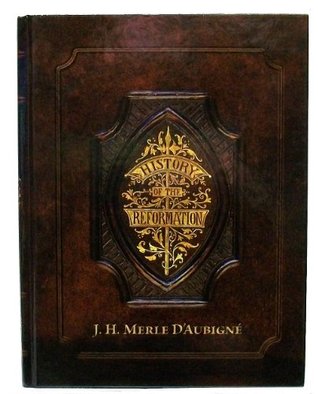
Faith, according to St. Paul, is the means by which the whole being of the believer—his intellect, his heart, and his will—enter into possession of the salvation which the incarnation of the Son of God has purchased for him. Jesus Christ is apprehended by faith, and thenceforth becomes every thing for man, and in man. He imparts a divine life to human nature; and man thus renewed, disengaged from the power of selfishness and sin, has new affections, and does new works. Faith (says Theology, in order to express these ideas) is the subjective appropriation of the objective work of Christ. If faith is not an appropriation of salvation, it is nothing; the whole Christian economy is disturbed, the sources of new life are sealed up, and Christianity is overturned at its base.

D’AUBIGNÉ, J. H. MERLE. HISTORY OF THE REFORMATION IN THE SIXTEENTH CENTURY (All 20 Volumes In 1 Complete Book) (HISTORY OF THE REFORMATION by J. H. MERLE D’AUBIGNÉ) (Kindle Locations 947-953). http://www.DelmarvaPublications.com. Kindle Edition.

The above was written by a French man in the early 1800’s.  

Jesus is the Way, the Truth and the Life.  He is the source of new life .  If anyone is in Christ he is a new creation.  Christ in us is our hope of glory.  Apart from Him there is salvation in no one else.  God has proven His love for us in that, while we were still sinners, He sent His One and Only Son that He might die for us and give us eternal life.  He made Him who knew no sin to become sin for us that we become the righteousness of God in Him.

Hopefully you can see why it is so important to immerse yourself in the Holy Scriptures which are able to make us wise unto salvation.

Have you been transformed by the renewing of your mind?  It is by faith we are saved, through grace. It is a gift of God.  However, the way we get faith is by hearing the living Word of God. 

Listen to Jesus – the Word – speaking to you through His Scriptures first and foremost.

Scriptures:

John 14:6; John 4:13-14; 2 Cor. 5:17; Col. 1:27; Acts 4:12; Romans 5:8; 2 Cor. 5:21; 2 Tim. 3:15; Romans 12:2; Eph. 2:8; Romans 10:17; John 10:27, 2 Tim. 3:16-17.


Understanding the Closeness of God

When we are dealing with the God who made everything, including every cell in our physical bodies and all the space He inhabits within our atoms – in Him we live and move and have our being (Acts 17:28) – there is every justifiable reason why we might get confused about hearing His voice or experiencing His presence.  He is so close!  In fact the English word “close” does not do justice to the amazing interaction of God with those He has an intimate relationship with.

So we can often think we are just imagining things when it is in fact God speaking to us.  One of the great things to learn how to do is to recognise that still, small voice that speaks to us out of the chaos and noise of everyday life (see 1 Kings 19:11-13).  To know His presence is even more intricate.  It is so intangible, so outside of, and yet works through, our emotional state.  We forget that we were made, designed, to know these things.  God’s voice and His presence can seem so natural we can just dismiss them as our imagination.  But even our imagination was made to enhance and help us understand the voice and presence of God.

“Today, if you hear His voice, do not harden your hearts.” (Hebrews 3:7, 15).  Actually, this is the nub of the matter: Do you really want to hear what God is saying to you (see John 7:17)?  Might He be saying, get out of the way and let Me work?  Possibly, though He will say it, if He has to, more graciously than that.