Category Archives: General Principles

Guidelines to how I view the cosmos

What is the Church?

A couple of people close to me recently asked me a question which seemed to betray a misunderstanding of church. The question was: “Why do people get hurt going to church?” The implication was that if the church is part of the Body of Christ how could God’s body do anyone any harm?

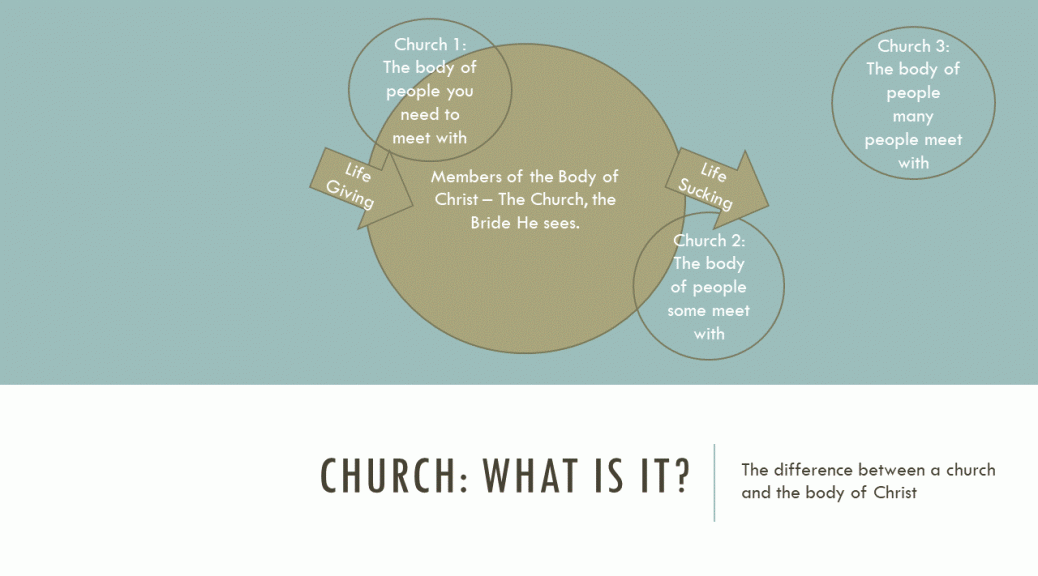
I think the misunderstanding is most easily cleared up by using a diagram.

In the diagram I show a large circle in the centre which shows the Body of Christ worldwide. Around the edges and to one side I draw three other circles that represent what most people call churches. The first thing to note is that no church (as the term is commonly understood) consists fully of people in the Body of Christ. I can say with confidence that there is no large group of people meeting on a Sunday morning on this earth whose members are all members of the Body of Christ. There may be smaller bodies of people who meet together, particularly in countries where the church is persecuted, that are all members of the Body of Christ but, even then, it can be a very hard thing to assess. How do you know whether everyone you meet with knows Jesus or not? (Part of the answer to that question can be found in 2 Timothy 2:19, i.e. “The Lord knows those who are His” and He can tell you and “Let everyone who names the name of Christ depart from iniquity” – you can know a believer by their consistent behaviour and character manifestation over a long period.)

Among these churches I have drawn a distinction between three types of congregations.

Type 1 is what I would call “life giving”. These are churches you need to go to if you are a member or aspire to be a member of the Body of Christ.  They encourage you to love Jesus and through Him to love the Father , your fellow brothers and sisters in Christ and your neighbour as yourself.

Type 2 is what I would call “life sucking”. These are congregations of people that do not encourage you to love God with all your heart or your neighbour as yourself.  They are often dying in the sense that they are reducing in numbers but that isn’t always a reliable sign.

Type 3 is just plain dead. There actually may be some people in it (unlike in the diagram) that are in the Body of Christ but they might as well not be since the church itself is doing nothing related to Jesus. These types of churches are all too common. There main distinguishing feature is that they are more interested in continuing their existence than they are in the well being of their attendees.

Diagrams like the above are of course limited in reflecting reality which is often more complicated and messy. Anyone, whether a believer or not, is capable of walking in the flesh and, as a result, either hurting someone or being hurt by someone.

The main point is this: don’t expect people in churches to act like the Body of Christ should act.  Not even most of the time. They are not the same thing. Be prepared to be hurt by people in church and you will be a bit more prepared and less disillusioned when it happens.

Mere Christianity

C.S. Lewis was asked by the BBC to give a series of talks on the radio during the second world war called “Mere Christianity”.  These were later expanded into a book which is one of the best summaries of Christianity out there.

One of the most famous passages from this book is the following statement about who Jesus is.  It is commonly known as “Lewis’ trilemma” or  the “Mad, bad or God” argument.  It is well worth reading this passage in context and, indeed, reading the whole book:

“Yet (and this is the strange, significant thing) even His enemies, when they read the Gospels, do not usually get the impression of silliness and conceit. Still less do unprejudiced readers. Christ says that He is ‘humble and meek’ and we believe Him; not noticing that, if He were merely a man, humility and meekness are the very last characteristics we could attribute to some of His sayings. I am trying here to prevent anyone saying the really foolish thing that people often say about Him: ‘I’m ready to accept Jesus as a great moral teacher, but I don’t accept His claim to be God.’ That is the one thing we must not say. A man who was merely a man and said the sort of things Jesus said would not be a great moral teacher. He would either be a lunatic—on a level with the man who says he is a poached egg—or else he would be the Devil of Hell. You must make your choice. Either this man was, and is, the Son of God: or else a madman or something worse. You can shut Him up for a fool, you can spit at Him and kill Him as a demon; or you can fall at His feet and call Him Lord and God. But let us not come with any patronising nonsense about His being a great human teacher. He has not left that open to us. He did not intend to.”

Lewis, C. S.. Mere Christianity (p. 24). HarperCollins Publishers. Kindle Edition.

Faith and Desire

God knows your deepest desires and isn’t surprised by any of them.  I believe that He has an answer to them all in Christ both for this life and the next.

As believers one of the things we have to get used to is that the line between this life and the next is very thin indeed.  There is a major transition involved, we need to shake off this mortal body and put on an immortal one.  But apart from that nothing else changes – much!  It does take faith to look over that gap and see our lives continuing on.

However, one of the keys of living a contented Christian life here is to hope and believe in satisfaction and contentment throughout our existence.  Some desires will be satisfied here during this mortal life, many will be satisfied there during the immortal stage.

God commends this kind of faith.  In the letter to the Hebrews, the writer ends up his panegyric about the heroes of faith in chapter 11 by saying this:

“All these people earned a good reputation because of their faith, yet none of them received all that God had promised.”

The saints of the Old Testament are still waiting for our time to come to a close before they will get all they desire.

So, if you are facing unfulfilled desires in this life, ask yourself whether God hasn’t planned to fulfil them in the next.  No, better still, ask God.  You might be surprised at His answer.


Basic Faith

Faith is the confidence that what we hope for will actually happen; it gives us assurance about things we cannot see.

It is impossible to please God without faith.  Anyone who wants to come to Him must believe that God exists and that He rewards those that sincerely seek Him. (Hebrews 11:1, 6 NLT)

When people ask me what we have to believe I have often said the Gospel requires very little faith in reality, at least to start with.  All we need to believe is that God exists and that He is good.  Everything else can be logically built upon those two foundations.  If God exists and is good then it follows that He would do all that the bible says He has done.

No one can prove God is, but then neither can any of us prove that anything ultimately exists since we cannot know the basic materials on which matter is built.  The more we split the atom, the more there is to split.  So, rather than being unreasonable, we logically believe in some basic building blocks (atoms, nucleus, protons, neutrons and electrons) and our engineered inventions (everything from fridges to freight carriers and beyond) are built on those beliefs.  They work because the things we believe about materials are true, i.e. God made materials the way we have found out (Proverbs 25:2).  We then build our lives on these beliefs even though we cannot see the basic building blocks of anything.  Depending on what we work at and, to some extent, what we want to find out, we know these things at different levels.

Take the example of a microwave oven.  You can “know” a microwave at different levels.

  1. A user might just know how to turn it on and what level to set it at to heat up the food he puts into it.
  2. A curious person might get to learn that a microwave works because it heats up the water in food using a specific type of electro magnetic wave.  This might help them to understand why some things shouldn’t be put in a microwave.
  3. At a deeper level someone else might understand the size of a water molecule and the wave length of the electro magnetic wave used in a microwave.  The connection between the two is what causes the water to heat up.
  4. The manufacturers of microwave ovens may need a team of people with different understandings of how it works and how to improve the design to stay ahead of the competition.

And so it goes on.

In the same way, the bible tells us to be reasonable.  Believe in some basic things: God is and He is good.  After that, everything God has caused to be written in His book is reasonable and makes sense.  And you can go as deep or be as shallow in knowledge as God and you want to be with that book – and Him.  Whatever about knowledge (1 Cor. 8:1-3) just make sure you are not content with being shallow in His love (Eph. 3:19).

God says: “I AM” (Exodus 3:14).  He is.

The bible goes onto say that God gave His only Son that whoever believes in Him should not perish but have eternal life (John 3:16).  He is not willing that anyone should perish (1 Tim. 2:4).  In other words He is good.

Start there.

Faith

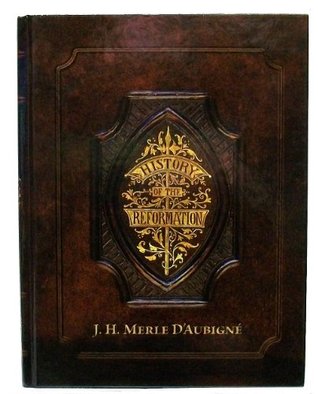
Faith, according to St. Paul, is the means by which the whole being of the believer—his intellect, his heart, and his will—enter into possession of the salvation which the incarnation of the Son of God has purchased for him. Jesus Christ is apprehended by faith, and thenceforth becomes every thing for man, and in man. He imparts a divine life to human nature; and man thus renewed, disengaged from the power of selfishness and sin, has new affections, and does new works. Faith (says Theology, in order to express these ideas) is the subjective appropriation of the objective work of Christ. If faith is not an appropriation of salvation, it is nothing; the whole Christian economy is disturbed, the sources of new life are sealed up, and Christianity is overturned at its base.

D’AUBIGNÉ, J. H. MERLE. HISTORY OF THE REFORMATION IN THE SIXTEENTH CENTURY (All 20 Volumes In 1 Complete Book) (HISTORY OF THE REFORMATION by J. H. MERLE D’AUBIGNÉ) (Kindle Locations 947-953). http://www.DelmarvaPublications.com. Kindle Edition.

The above was written by a French man in the early 1800’s.  

Jesus is the Way, the Truth and the Life.  He is the source of new life .  If anyone is in Christ he is a new creation.  Christ in us is our hope of glory.  Apart from Him there is salvation in no one else.  God has proven His love for us in that, while we were still sinners, He sent His One and Only Son that He might die for us and give us eternal life.  He made Him who knew no sin to become sin for us that we become the righteousness of God in Him.

Hopefully you can see why it is so important to immerse yourself in the Holy Scriptures which are able to make us wise unto salvation.

Have you been transformed by the renewing of your mind?  It is by faith we are saved, through grace. It is a gift of God.  However, the way we get faith is by hearing the living Word of God. 

Listen to Jesus – the Word – speaking to you through His Scriptures first and foremost.

Scriptures:

John 14:6; John 4:13-14; 2 Cor. 5:17; Col. 1:27; Acts 4:12; Romans 5:8; 2 Cor. 5:21; 2 Tim. 3:15; Romans 12:2; Eph. 2:8; Romans 10:17; John 10:27, 2 Tim. 3:16-17.


Understanding the Closeness of God

When we are dealing with the God who made everything, including every cell in our physical bodies and all the space He inhabits within our atoms – in Him we live and move and have our being (Acts 17:28) – there is every justifiable reason why we might get confused about hearing His voice or experiencing His presence.  He is so close!  In fact the English word “close” does not do justice to the amazing interaction of God with those He has an intimate relationship with.

So we can often think we are just imagining things when it is in fact God speaking to us.  One of the great things to learn how to do is to recognise that still, small voice that speaks to us out of the chaos and noise of everyday life (see 1 Kings 19:11-13).  To know His presence is even more intricate.  It is so intangible, so outside of, and yet works through, our emotional state.  We forget that we were made, designed, to know these things.  God’s voice and His presence can seem so natural we can just dismiss them as our imagination.  But even our imagination was made to enhance and help us understand the voice and presence of God.

“Today, if you hear His voice, do not harden your hearts.” (Hebrews 3:7, 15).  Actually, this is the nub of the matter: Do you really want to hear what God is saying to you (see John 7:17)?  Might He be saying, get out of the way and let Me work?  Possibly, though He will say it, if He has to, more graciously than that.

Sodom and Gomorrah

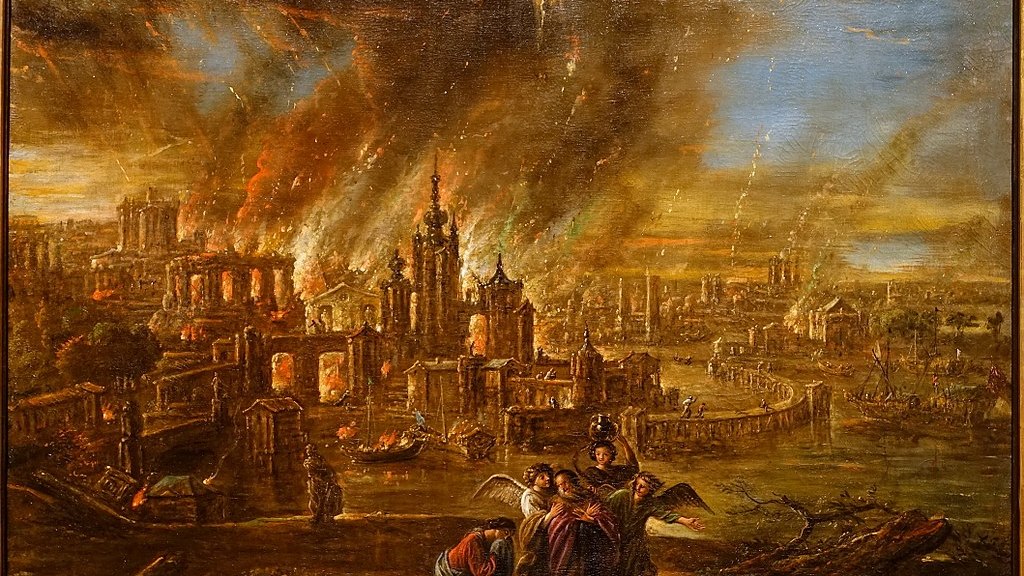
I am reading a book by Charles Swindoll called: “Abraham: One Nomad’s Amazing Journey of Faith.”  In it Charles includes a very convicting chapter on Genesis 19 and the destruction of Sodom & Gomorrah.  It is a word for today’s church.

I am a firm believer that things are improving in many ways but I don’t think anyone could say that things have been improving over my lifetime morally.  There has been more concern for social justice expressed among the richer young people, more eradication of absolute poverty, more education, better living standards for nearly everyone and a less polluted environment in many places.  All these things are good and can in large part be ascribed to charitable impulses arising from Christians who have been reading their bibles, listening to God and making changes to their lives and the lives of those around them accordingly, often empowered by the Holy Spirit.  It is good to see accounts of people like Desmond Doss in the Mel Gibson film “Hacksaw Ridge”, and Abraham Lincoln in “Lincoln”.  There are good men & women out there, we know many who are giving their lives selflessly in many places around the world, some at great cost to themselves.

However it is also impossible to deny that many forms of immorality are on the increase.  Things that my ancestors would have thought gross immorality are now lauded as virtues by the peers of my descendents.  The continuous and unrelenting destruction of innocent life by the hands of their mothers and colluding medical staff – if you had told someone at the beginning of the 20th Century that such behaviour was going to be protected by the law at the wishes of the majority of the people, very few would have believed you.  If you had also told my ancestors that we would have a openly homosexual Taoiseach and an openly practicing lesbian (and witch) as our Minister for Children – well no one would believe you 100 years ago.  Or even 50 years ago.  Most young people would laugh at the idea that having sex before marriage was somehow wrong and they don’t know what fornication means.  Adultery is so common no one remarks on it much.

The inevitable consequence of our continuing tolerance of this downward slide among our people here in Ireland and across the western world is judgement.  It cannot be otherwise.  Somewhere along the line God is going to say “Enough” and end it all.  He did it at the Flood, at Babel, at Sodom & Gomorrah and He will do it again.  Most likely in the next 20 years or so He will usher in a new age during which He will rule the nations with a rod of iron (Psalm 2:9, Rev. 2:27, 19:15).  You won’t want to be on the wrong end of that rod when it comes.

On our part we need to be sure we are not becoming like Lot, desensitized, perverted and too fond of the comforts that the improvements are bringing about to want to lift our heads above the parapet and call a spade, a spade.

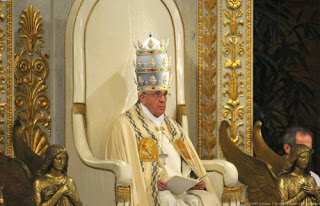
Why would anyone believe the Pope is the Anti-Christ!?!

People believe all sorts of things for all sorts of reasons.  Many people believe everything they read on the Internet, others believe everything Trump says.  A lot of people believe the Bible literally including when it says the world was created in 6 x 24 hour days.

So it should come as no surprise that for hundreds of years, millions of people believed the Pope was the Anti-Christ.  These people were called Protestants or Reformers and from the 16th to the beginning of the 19th Century they all agreed on this one thing while disagreeing on many other things.  Many well known names agreed that the Pope is the Anti-Christ, people like Luther, Calvin, Zwingli and the Wesley brothers.  In fact it wasn’t until the beginning of the 19th century that any significant branch of Protestantism began to dispute this position.  J.N. Darby of the Brethren movement was among the first.

Of course now hardly any Protestants believe that the Pope is the Anti-Christ except a few die-hard Ulster Unionists from the DUP and other cranks on the Internet with small readership.  It is not exactly a popular position among Evangelicals or Pentecostals either.  A lot of people would take the view, understandably, that there is little value in adopting such a position.

Be that as it may I still think it is worthwhile looking at why this position was so universally held by so many significant people for so long.

One obvious reason was they were normally in countries that were at war with countries that allied themselves with the Pope or they were in countries where their lives were in danger because they had a bible.  They had plenty of historical precedent to know they were up against a mortal enemy.  One of the Crusades was sent against a group of people in the South of France whose only crime was to not submit to the Pope. There had been many martyrs before Luther pinned up his famous 95 theses.

The Biblical basis for their beliefs about the Pope and the Roman Catholic Church were also well thought out and convincing.  Apart from several passages in Revelation the main passages in the Bible that talk explicitly about the Anti-Christ can be found in 2 Thessalonians Chapter 2:

  1. In verse 3 the writer (Paul, Silas or Timothy) says that the “man of lawlessness .. will oppose and will exalt himself over everything that is called God or is worshiped, so that he sets himself up in God’s temple, proclaiming himself to be God.”  In the other letters they saw that Paul was very consistent in calling the body of believers corporately (i.e. the Church) God’s temple.  So they understood that the Anti-Christ was going to be someone sitting in the middle of the Church, calling himself God (Vicar of Christ is one of the Pope’s titles which means “in place of Christ”).
  2. In verses 5-8 the writer says this: “Don’t you remember that when I was with you I used to tell you these things? And now you know what is holding him back, so that he may be revealed at the proper time. For the secret power of lawlessness is already at work; but the one who now holds it back will continue to do so till he is taken out of the way.”  The common understanding of these verses during Reformation times was that the power that was restraining the Anti-Christ at the time of the first century (when the letter was written) was the Roman Emperor.  Their reasoning went that the Anti-Christ could not achieve world dominion or the secular power that he had during the centuries before and during the Reformation if Christianity was being persecuted and kept underground.  They could also look back on history and note something that was a very striking fulfilment of the verses.  When Constantine became the first Christian Emperor of Rome in the middle of the 4th century he did the most unusual thing.  He moved the capital of the Roman Empire a thousand miles away from Rome to a new city called Constantinople (now Istanbul) on the Bosphorus Straits in present day Turkey.  Once he was moved out of the way, the stage was set for the government of the City of Rome to be taken over by another.  Since there was no separation of Church and State that person was the first Pope.  They also used to say that the reason the writer did not come out and explicitly say that the restrainer was the Emperor was so as not to get people receiving the letter in more trouble than they already were with that power.

There are lots of other verses and passages the Reformers used to back up their position which I will explore in further blogs.

Of course they could have been wrong.

Taking Offence

It is very easy to find fault with people and organisations.

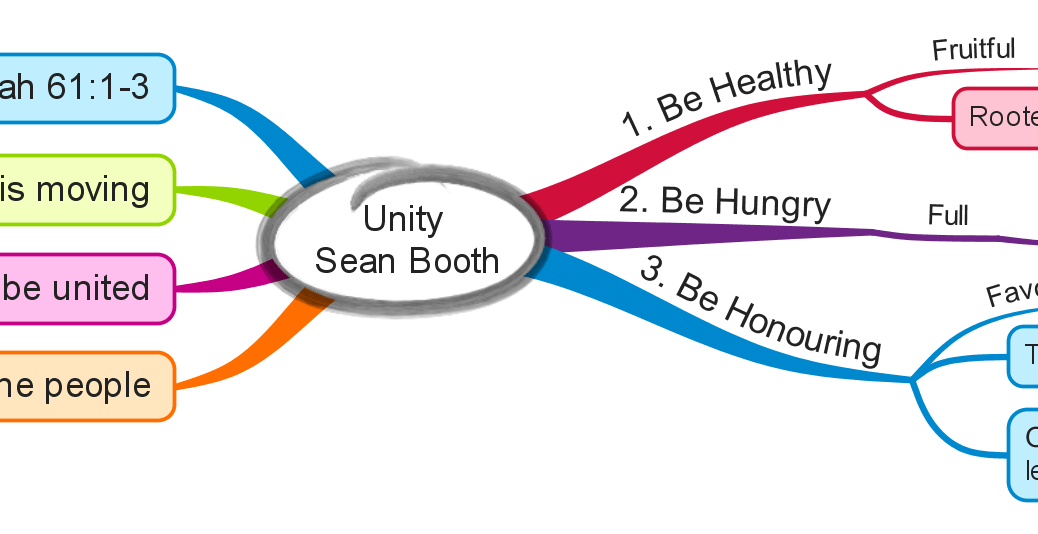
Last night at Open Arms “Heart & Soul” meeting, Sean Booth spoke the word of the Lord to us.  I took the following notes in mind-map format.

The word that struck me most was “Be Honouring”.  I noted that that includes honouring those who have left and are bitter.  People leave congregations for all sorts of reasons, some good, some not so helpful.  Being offended about something someone has done, or the way things are done is easy.

In fact, that is the way the world works.  I was at a talk recently given by a learned UCD professor (it was a closed group so I don’t want to say who here publicly) who pointed out the reality that if you want to get the government to do anything all you have to do is complain loudly about some injustice or other.  In fact that is the only way anything substantial happens in the public service at least in Ireland.  If you follow current affairs you will know that is true.

However in the Church of Jesus Christ we are called to a different path.  Jesus chose crucifixion rather than complaining about all the offensive things people have done, do and will do against Him.  He is calling us to the same approach.

Now that is not to say that if someone does something criminal it should just be covered up.  That is the way a very large religious organisation has gone to the shame of all its adherents.  But unless I have at least two witnesses to something like that, something criminal or obviously reprehensible, I am not going to entertain it.

Not that kind of fence

Bound

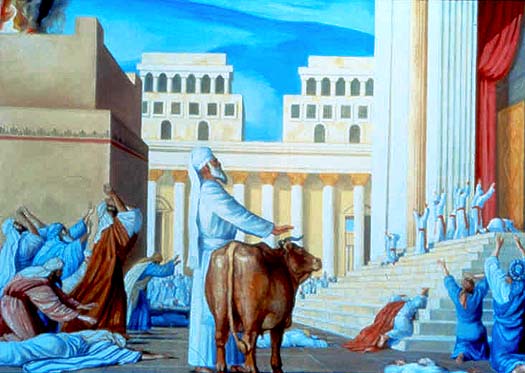
The story below is about a hypothetical old testament character bringing a bullock to the temple to be sacrificed as a whole burnt offering. I go on to draw the conclusion that our flesh is just like that bullock, substantial, costly and unwilling to go to the slaughter.

bullock

Bucking and pulling, the bullock refused to stay still.

“Come on, I guess you know you are going to be slaughtered.  Pity you can’t be like a lamb and just go quietly.”  Jacob managed to tie another rope around the bullocks head while he thought that.

It was their prize bullock, the first fruits, the tithe, that they had brought to Jerusalem to be slaughtered.  It was a big beast and not that stupid that it didn’t sense what was coming.

“Just two more ropes should do it.” Jacob looked over at his father straining to tie the ropes around the horns of the altar.  They were the strongest parts of it and once there were four ropes, one on each corner, they could begin to draw the bullock in.

Jacob knew his father loved Yahweh and was drawing on these ropes motivated by that love.  He remembered what he had been taught about the prophets Jeremiah’s and Hosea’s writings*, how God had drawn His people out of Egypt and brought them with similar cords of love during all their years in the wilderness and afterwards. The picture of a bucking and rebellious people reluctantly being led was clear as he watched this bullock’s antics.

Jacob also knew that this bullock was worth a lot and represented a significant sacrifice on the part of his dad but he also knew his dad didn’t think of it that way.  He just wanted to give his best to the God who had loved him and prospered him all his days with finances, family and peace.

The bullock was more subdued now.  The priest stuck the knife in and drained the blood from the beast.  The life of the beast was in the blood and as it was poured out so the life left the beast and only a carcass remained.

This was a whole burnt offering.  The smoke went up in billows and spread a pungent odour around the temple area.


Many years later a man with a mission called Paul wrote to some Romans and said that they should offer themselves as a living sacrifice (Romans 12:2) or, in reality, we all should.  The flesh represented by the bullock is strong and not rational.  It doesn’t want to die.  The cords of love that cause us to bring our sinful natures to the altar are strong.  They are the bindings of a God who loves us.  Like a moth to a flame we cannot help but be drawn to the death of our old ways by the look in His eyes.

“I died for you, will you not trust Me?” Jesus asks.

“My Father loves you and has only the best plans for you.  Will you not trust Him?”

*Jeremiah 31:3, Hosea 11:4.