Category Archives: General Principles

Guidelines to how I view the cosmos

Hope for the intelligent and the danger of hypocrisy

I have been an amateur biblical scholar for many years now.  I have read lots, attended lectures and numerous conferences and bible studies, read the bible through every year at least once, transcribed the New Testament, learnt NT Greek and read extensive church (& secular) history over the 30 years since I became a Christian.  However all of this has been done in an informal manner and I have only once done a formal bible college course module.

I respect anyone that has spent all their working lives studying the Scriptures.  I don’t presume to know as much as them.  I do know what it is like to study something in depth.  I am an expert on mobile telephony and several other related fields due to the 30 years or more I have spent studying those subjects full time throughout my working life to this date.  There is no substitute for time and intelligence when studying something.

So why was Jesus so hard on the learned and those who had spent their whole lives studying the Scriptures in His day?  There seems to be two reasons:

  1. “Woe to you Scribes and Pharisees, hypocrites!” Matthew 23, etc.  They said but didn’t do.
  2. “You search the Scriptures because you think in them you have eternal life.  And it is these that bear witness of Me and you are unwilling to come to Me that you may have life.” John 5:39 NASB.  They did not study in the context of knowing and loving Jesus in the Spirit and coming to Him with their studies.

There probably would not be much hope for the learned and those who spend their lives studying the Scriptures in the Scriptures if it wasn’t for Nicodemus (John 3) and, even more significantly, Paul.    Paul in particular redeems all those who have intelligence and an encyclopedic knowledge of all things Scriptural.  But it is of course very significant that until he met the Holy Spirit in a personal, traumatic way (Acts 8) he was actually working against the God he professed to be working for.  Afterwards he was not disobedient to the heavenly vision continuously proving his lack of hypocrisy by his actions.

Those who have the time, inclination and propensity for studying the Scripture full time are few in this world.  For these people the danger is that the Scripture becomes a sort of god in it’s own right of which John 5:39 rightly warns us.  There seem to be a lot of churches around (evangelical ones as well) where there is a lot of emphasis on the Scripture but very little evidence of Jesus manifested in their lives.  I would not be alone in that assertion.  If anyone starts making a big fuss about what translation to use, for instance, I’d like to see their lives first.  There is a danger that people who spend most of their time studying these things may find it more difficult to find time to go visiting widows and orphans, the sick in hospital or prisoners.  I’m speaking as much to myself as anyone else in this.

Cursing while praying

The Imprecatory Psalms

Psalm 12

To the Chief Musician. On an eight-stringed harp. A Psalm of David.

12 Help, Lord, for the godly man ceases!
For the faithful disappear from among the sons of men.
They speak idly everyone with his neighbor;
With flattering lips and a double heart they speak.

May the Lord cut off all flattering lips,
And the tongue that speaks proud things,
Who have said,
“With our tongue we will prevail;
Our lips are our own;
Who is lord over us?”

“For the oppression of the poor, for the sighing of the needy,
Now I will arise,” says the Lord;
“I will set him in the safety for which he yearns.”

The words of the Lord are pure words,
Like silver tried in a furnace of earth,
Purified seven times.
You shall keep them, O Lord,
You shall preserve them from this generation forever.

The wicked prowl on every side,
When vileness is exalted among the sons of men.

What is wrong? 2010-10-12-True-for-Now

Liars on every side, no faithful men to be found, people using powerful and clever words to achieve their own ends.  Sounds like a normal day at the White House or in the Kremlin. Or for that matter in the Dail.

What is the curse?

May the LORD cut off all flattering lips and every boastful tongue. V.3

Application

The wicked freely strut about when what is vile is honoured among men.  There needs to be honesty and truth in all our dealings with each other.  If a man says he will do something, he should do it.  Bluffers and wafflers need to be shown up, not honoured.  The “cute whore” nod-nod, wink –wink, mentality that pervaded Irish life and politics and was honoured in certain political parties led to the wicked freely having their way in corruption and theft.   It would have been better if some specific prayer similar to verse 3 was sent up to God about some of these men.  We might have been saved a lot of trouble.

Psalm 35

What is wrong?

The author is under attack.  Some are seeking to kill him or ruin him, others to repay him evil for the good he has done them.  And others are gloating over his distress.

5-Wednesday-Day-Three-Pic-1-Saul-and-David-300x204


What is the curse?


LORD, do unto them as they would do unto me.  Put them to shame and confusion.

Application

I don’t think many of us have human enemies of the sort David did at the time he wrote this psalm.  However we all have spiritual enemies who would seek to do same things as described in this psalm.  They should be cursed in the same way, i.e. by calling upon God to judge them (cf. Jude 8-10).

Psalm 58

To the Chief Musician. Set to “Do Not Destroy.” A Michtam of David.

58 Do you indeed speak righteousness, you silent ones?
Do you judge uprightly, you sons of men?
No, in heart you work wickedness;
You weigh out the violence of your hands in the earth.

The wicked are estranged from the womb;
They go astray as soon as they are born, speaking lies.
Their poison is like the poison of a serpent;
They are like the deaf cobra that stops its ear,
Which will not heed the voice of charmers,
Charming ever so skillfully.

Break their teeth in their mouth, O God!
Break out the fangs of the young lions, O Lord!
Let them flow away as waters which run continually;
When he bends his bow,
Let his arrows be as if cut in pieces.
Let them be like a snail which melts away as it goes,
Like a stillborn child of a woman, that they may not see the sun.

Before your pots can feel the burning thorns,
He shall take them away as with a whirlwind,
As in His living and burning wrath.
10 The righteous shall rejoice when he sees the vengeance;
He shall wash his feet in the blood of the wicked,
11 So that men will say,
“Surely there is a reward for the righteous;
Surely He is God who judges in the earth.”

What is wrong?

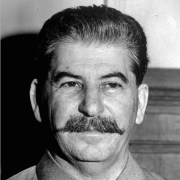
Wicked rulers.00733518.jpg
What is the curse?

LORD, destroy their power and get rid of them.

Application

We all know dictators that it would be good to curse in this way even now never mind Genghis Khan, Hitler, Stalin, Pol Phot and the list of other despots that there have been through the ages.  The amount of misery such men can inflict makes these curses wholly appropriate.

Psalm 59

What is wrong?

The author is under attack from a group of men who besiege him and are out to slander and kill him (probably Saul’s men according to the heading).

What is the curse?

LORD, punish them, show no mercy, but don’t just kill them, make them wander about and let them be caught first and then consume them in wrath and destroy them utterly.  I don’t know why David said not to just kill them, he could have saved himself many years of running around the mountains.

Application

I don’t think many of us have human enemies of the sort David did at the time he wrote this psalm but it can happen.  David had a long on-going battle with Saul and his forces – perhaps we need to be careful how we curse!!!

Psalm 69

What is wrong?

The author is in despair because as he seeks the Lord people begin to hate him without reason, scorn him and alienate him – including his own family members.  When people insult God he feels it personally (v. 9).  Scorn has broken his heart and left him helpless and there is no one to comfort him, in fact they do the opposite.

What is the curse?

May the table set before them become a snare;
may it become retribution and a trap.
23 May their eyes be darkened so they cannot see,
and their backs be bent forever.
24 Pour out your wrath on them;
let your fierce anger overtake them.
25 May their place be deserted;
let there be no one to dwell in their tents.
26 For they persecute those you wound
and talk about the pain of those you hurt.
27 Charge them with crime upon crime;
do not let them share in your salvation.
28 May they be blotted out of the book of life
and not be listed with the righteous.

Application

This psalm is full of prophetic statements that the NT writers use in relation to the life and death of Jesus. In John 15:25, the Lord quoted Psalm 69:4 in reference to His mistreatment by the Jews, “They hated Me without cause.”  The Apostle Paul quotes verses 22 and 23 in Romans 11:9-10.  The first part of verse 9 is fulfilled when the Lord cast the money changers out of the Temple (John 2:17).  The last part is quoted in Romans 15:3.

Yikes!

Being thankful for what Christianity has brought to our societies

Back in 2013 I did a course in biblical interpretation at the IBI and this came up during it.  I thought I’d post it here for others to see also.  All comments are welcome.

We have access to the results of generations of the Lord’s people operating in the abundance of His grace that has been given to us as a result of the death of Christ.  Their (and our) faith in Him has resulted in many blessings being released into the world.

As a result of the prayers of the saints and the gracious action of God in our societies here in the West (and elsewhere) we experience innumerable blessings:

  • good governmental systems;
  • justice systems based on a good moral basis[1];
  • freedom from slavery;
  • law enforcement;
  • business in an environment of trust[2];
  • access to hospitals, nursing, doctors;
  • education
  • a legacy of Christian inspired classical music, literature, art, etc. for nearly everyone in our societies if they want it.

Resulting from the Christian understanding of a rational God we have

  • technologies that our ancestors couldn’t even have conceived of impacting the military, medical, communications, computing, transport and other areas.
  • We enjoy a lifestyle of luxury arising from free trade and corporate business cooperation that even their kings in their wildest imaginations had no idea could be had;
  • We enjoy the exotic produce of the land and sea from all over the world delivered to our door if we want it[3]

our material comforts are in another league to our ancestors.

Our understanding of the world and its astonishing variety and our exposure to knowledge about it and the universe through personal travel, education and TV, means that – if we had eyes to see it – we have been exposed to many of the miracles of God.

Here in the west we know little or nothing about persecution to the point of death.

That is not to say that every advance in Western society is directly attributable to Christians but I believe many are directly attributable to a Christian worldview – or on a more fundamental level – to God.  He is working through the revelation of His truth in the Scriptures to provide the basis for everyone’s thinking in Christian societies.  You only have to learn about the development of a society where some other basis is at work (e.g. animism, Buddhism, Islam or Hinduism) to see the difference. Not that many of those have been left untouched by the Christian worldview since the 19th century.


[1] At least originally – nowadays they are inclined to move to precedence but there is still an underlying Christian basis to the constitutions of the world’s major democracies which in turn determines the principles of justice used (e.g. innocent until proven guilty).

[2] That mightn’t seem to be the case but you only have to experience the difference between operating in a society where there is much less or no trust to see how important this is and how much we take it for granted.  Transparency International clearly show the relationship between trust (i.e. lack of corruption) in society and its prosperity.

[3] Tesco deliver to your door for just €5 more in nearly every part of Ireland.

Apostolic Ministry Today


Many people consider the 12 apostles as a class apart into which they substitute Paul for Judas. That is backed up by the fact that John says that the wall of the “the holy city, Jerusalem” which descended from heaven had twelve foundations on which were the names of the twelve apostles (Rev. 12:14). However the term apostle is used in a more general way as well. For instance in Romans16:7 two people are mentioned (one a woman) who are called apostles but don’t belong to the twelve.

The word apostle is a direct transliteration of the word “apostolos” in Greek meaning “sent out one”. In Latin the word is “misseo” from which we get the word “missionary”. Our common use of the word “missionary” to describe someone sent out from the church to plant (or assist in planting) churches elsewhere has no parallel in Scripture other than in the use of the word “apostle” since it means the same thing and would have been read in that way by the original readers of, for example, Luke 10:1:

10 After these things the Lord appointed seventy others also, and sent them two by two before His face into every city and place where He Himself was about to go.

So when I say I believe in apostolic ministry today I am saying that I believe that every missionary sent by God to plant churches is partaking in an apostolic ministry today. Some missionaries are not sent by God and others are assisting in church growth by bringing another gifting to the place they are sent to such as prophecy (often manifested in preaching), teaching, etc. (see 1 Cor. 12: 28-29, Ephesians 4:11-12). So the word “missionary” as we commonly use it does not just include the apostolic ministry but these other ministries as well.

There are therefore much fewer apostles (in the biblical ministry sense) who are missionaries than there are missionaries in general. However I believe that this ministry does exist and is happening today all over the world.

Of course people are free to disagree with me on this. I believe the Scripture in our age of grace is not prescriptive on such

matters. The Holy Spirit doesn’t mind much what you call yourself as long as you are working with Him and not against Him in His purposes. Better to be working in the field planting churches or assisting them than sitting around discussing what you call someone who is!

The Heavens declare the glory of God

The heavens declare the glory of God;
And the firmament shows His handiwork.
Day unto day utters speech,
And night unto night reveals knowledge.
There is no speech nor language
Where their voice is not heard.
Their line has gone out through all the earth,
And their words to the end of the world.

In them He has set a tabernacle for the sun,
Which is like a bridegroom coming out of his chamber,
And rejoices like a strong man to run its race.
Its rising is from one end of heaven,
And its circuit to the other end;
And there is nothing hidden from its heat.

Psalm 19:1-6

There is so much to be learnt from a study of the physical heavens that everyone can see.  A wonderful example is the true story about the Star of Bethlehem which is quite astonishing and easily verifiable by anyone with a program that shows planetary positions 2 millennia ago.

Even simpler examples of what God wants to say to man abound in the way He created the heavens.  We have a song that we sing in Open Arms which says “Jesus at the centre of it all” and indeed He is.  And as a picture in this physical world He has put a representation of God, i.e. the Sun, at the centre of all the planets which revolve around it.

These planets include our own.   Before Copernicus said otherwise people used to think that the earth was the centre of the universe and that everything revolved around us. But God had made it so that the centre would represent Him not us and in fact everything revolves around Him.  Jesus at the centre.

Another similar example is to be found in the rotation of the earth.  As the earth turns on its axis we revolve towards the sun and then away from it and so night comes followed by day.

It is a daily reminder that if we turn away from God we will be in darkness, as we turn towards him we are in the light.

Similarly the moon often is seen as representing the devil.  It is barren and lifeless, but even it can reflect the glory of God when turned to His purposes.  Its courses are set and sometimes it even obscures the sun, sometimes partially, more rarely totally and only ever to a limited number of observers.  Likewise evil can sometimes arise and seem to obscure all that is good but that is a rare event.  Even in a total eclipse there is light around the edges, the moon can never completely shut out the light of the sun and neither can evil ever completely block out all good.  Even at its worse it is actually just an illusion, the sun still shines as strong as ever behind the moon, just as God’s power and glory is not lessened in any degree by the worst evil of men.

Some people say that before the Old Testament began to be written by Moses that some of the descendants of Shem, Noah’s son, could tell you the story of redemption from the patterns God wrote into the stars.  This may have been what David meant when he said: “Day unto day utters speech,  And night unto night reveals knowledge.”   Then again it doesn’t have to, there is enough out there that reveals knowledge without having to dig very deeply at all.

Today must have been one of the most gloriously bright days I have experienced out here in the countryside of Kildare.  It was all light without much heat…hmm.. I’m sure there is more knowledge to be revealed in there somewhere.

Channelling The Holy Spirit

“Channeling” is a term often used by spiritists and others to describe the way in which spirits from the spirit world can be brought into action in this material world through human channels.

Christians naturally (I use the word deliberately) shy away from such things.

However a Spirit filled Christian is a temple of the Holy Spirit according to Scripture (I Corinthians 6:19) and therefore should actively be channeling Him into this world. Jesus was the ultimate example of this. He is the spiritual Word made flesh (John 1:14), channeling God into the world through His flesh and we also ought to be the same.

And if you want to extend the influence of the Holy Spirit beyond your own physical sphere you can pray.

Expert Witness

A major part of my work these days involves being an expert witness at court trials. Expert witnesses are highly prized in court for their ability to explain the truth about various technical matters in a way that an untrained jury can understand. Or at least they should do that. Expert witnesses are normally completely immune from prosecution. In the UK there has only ever been one successful case taken against an expert witness which went to the supreme court there. In Ireland there hasn’t been any.

I usually give evidence in criminal prosecutions and normally on the side of the DPP (State). It actually doesn’t matter to me which side I am on since the truth will always work on the side of the innocent and against the guilty. Jesus explains this very well in John 3: 19 – 21:

“19 And this is the condemnation, that the light has come into the world, and men loved darkness rather than light, because their deeds were evil. 20 For everyone practicing evil hates the light and does not come to the light, lest his deeds should be exposed. 21 But he who does the truth comes to the light, that his deeds may be clearly seen, that they have been done in God.”

On a number of occasions recently I have said to the prosecuting barristers the following: “Surely if the defendant is innocent he would be delighted with this evidence since he would point to it and say: “See I told you, this evidence backs my story up.” But if he is guilty then he would try and discredit the evidence and say “it is not good evidence”. ”

I’ve observed exactly that happen on a number of occasions recently. Once the defending barrister took so long cross examining me that I had the opportunity to say something similar in the witness stand. Several members of the jury looked at me and nodded their heads or smiled. I suppose it was no surprise then that the defendant was convicted.

Something very similar happens when I share the Gospel. Very often people will try and say that that is not good evidence when it is presented, despite the obvious truth of it. The Bible would stand up in court as expert witness material any day. As Jesus says: “the word that I have spoken will judge him in the last day.” (John 12:48).

More evidence that demands a verdict can be found at www.Bethlehemstar.net. Even if the Bible itself was not evidence enough for Jesus being the Son of God the astronomical evidence about the Star of Bethlehem alone would be enough to prove it in court. And what about any detailed study of creation? See www.Creation.com for example.

But as I said to one of the engineers at work recently who, of all people, depend on the truth about creation to do their work (it won’t work unless they are aware of how God has made things whether they acknowledge Him or not): “Even with this evidence people still will not believe.”

But what will they do in the end?

The Book of Isaiah

When I was first born again (on the back of a bus travelling from Mullingar to Galway, Ireland – May 7th, 1980) one of the things that helped establish my faith at the time was the amazing prophecies and writings of the Book of Isaiah.

The Book of Isaiah has 66 chapters and these are divided in a way that reflects the structure of the 66 books of the bible. Chapter 40 of Isaiah starts with “Comfort, comfort My people” and ushers in 27 chapters with a tone as much reflective of the New Testament (27 books) as the previous 39 chapters are of the old.

Isaiah 53 is one of the great prophetic passages about Christ’s crucifixion and the reason behind it.  Psalm 22 is another one.     Among the Dead Sea Scrolls is a complete copy of the Book of Isaiah.  This is significant for a number of reasons:

1.  The latest date of the Isaiah Scroll is 100 B.C.  So the Book of Isaiah predates Christ’s crucifixion (@33 AD) and the canon of the bible (@100 AD).

2.  There have been many efforts to discredit the bible by liberal theologians in the 20th Century.  So called “Higher Criticism” has tried to lower the authenticity and authority of the bible.  One of the arguments was that there were several Isaiah’s including one for the last 27 chapters who was different from the Isaiah of the first 39.    However all the Book of Isaiah was discovered on one scroll with no divisions into chapters or parts and no indication of another author.

The whole book is worth reading of course as is all of the bible.  But here are some especially moving and pertinent verses from Isaiah 53:

“Surely he took up our pain
and bore our suffering,
yet we considered him punished by God,
stricken by him, and afflicted.
But he was pierced for our transgressions,
he was crushed for our iniquities;
the punishment that brought us peace was on him,
and by his wounds we are healed.
We all, like sheep, have gone astray,
each of us has turned to our own way;
and the Lord has laid on him
the iniquity of us all.”

Thank God He has!  This is the Gospel – Good News that everyone needs to hear.

Why Egypt welcomed Islam – a bit of church history

Or this could be titled “One of the reasons I hate religion”.

Until the 4th Century AD it often cost your life to be a Christian.  There were 10 severe persecutions of Christians all over the Roman Empire starting with Nero in AD 60 and ending with Diocletian.  You thought twice before becoming a Christian since there was every chance you could lose your life, possessions and loved ones if you did.

However that all changed when Constantine embraced Christianity around AD 318.  The Edict of Milan of that year legalised Christian worship, later it became compulsory to be a Christian!  Now, not only was there no state organised persecution, it was actually of great benefit to your career in any government post to be a Christian.  Add to that the fact that there was no separation between church and state and you no longer had to think twice before declaring yourself a Christian and everyone was doing it.

Both Jesus and Paul had warned about “wolves in sheep’s clothing” rising up from among them and not sparing the flock (Matthew 7:15; Acts 20: 29, 30).  And so it turned out.

The next several hundred years are characterised by huge amounts of religion and very little true Christian discipleship.

The head of the “Roman” empire moved himself to Constantinople and was effectively taken out of the way so that another head could arise –  the Pope in Rome.  However he wasn’t the only “head” at that time, there were four of them:  The Coptic Pope based in Alexandria, Egypt; the Syriac Patriarch based in Antioch in present day Turkey, the Greek Orthodox Patriarch based at Constantinople as well as the Roman Catholic Pope based in Rome.

Each of these four heads divided up the Christian world based on 4 views of the divinity and humanity of Christ.  I can’t tell you what the different views were, I suppose I should know, everyone at that time seemed to know which side they were on.

What has this to do with Egypt welcoming Islam?  Bear with me, we’ll get there.

At one of the Councils in the middle of the 5th century the then head of the Copts led an army of his followers into Constantinople.  He did this in an attempt to force their particular view of the nature of Christ down the throats of the others who had gathered there and so gain power over the Roman Empire.

In response the emperor of the day backed the Patriarch of Constantinople with a fleet and an army and imposed their view on the Copts instead.  All of Egypt – 20 million people – was ruled by Greek Orthodox governors with the Emperor’s fleet in the bay at Alexandria to help keep them in line.  (See the History of the Decline and Fall of the Roman Empire by Edward Gibbons Vol. 4, Chapter 47).

Do you think God was pleased with all this bickering?  Well it would seem not.  About the beginning of the 7th century, Mohammed and his followers began to gain power.  They became fanatical and, inspired by a religious zeal backed by direct revelation from an angel, their armies quickly gained the upper hand over the bickering and divided Christians.  It didn’t take them long to leave Arabia and conquer a vast swathe of land, all of present day Jordan, Syria, Palestine and Lebanon, Iraq and Iran and parts of present day Turkey.    In the process the Patriarch of Antioch and all his followers came under Muslim domination.  There is still a remnant left today of the Syriac church in the region but not much.

An army of 100,000 fanatical Muslims drew up near the border with Egypt and stopped.  There was no way they were going further with 20,000,000 Christians in front of them.  Or was there?

Cue, the welcome.  The Coptic Egyptians saw this impressive army and thought they could do a good job of overthrowing their unwelcome Greek Orthodox overlords.  So they invited them in (see Gibbon’s History referred to above chapter 51).  The well motivated Islamic army conquered the Greek army and sent the fleet packing.  Egypt came under Islamic rule and over the centuries since the population was pressured through discrimination to turn from being Christian to being Muslim.  Today 85-90% of the 100,000,000 people in Egypt are Muslims.

Eventually, the third head -that of the Greek Orthodox church and its capital Constantinople – fell to the Muslims in the mid 15th century.  This left only the Roman Catholic Pope left.

And that, my friends, is how Egypt welcomed Islam.  A sorry reflection on organised religion and no sign of the love of Christ anywhere.  This period was the beginning of the Dark Ages which were dark at least partly and probably mainly because of a great apostasy from Christ’s teachings (2 Thess. 2:3) even though there was plenty of so called “Christian” religion.

The similarities with the present state of Evangelical religion in the West should be obvious.

Submission

When Jesus was 12 He went up to Jerusalem with His parents.  When they went home He stayed behind, beginning the work His Father had called Him to do.  But they didn’t understand that when He told them.  So He went back with them and stayed in submission to them until the Jewish age of majority which was 30 in those days.  You can read about it in Luke 2:41-52.

I would hope I would recognise when my 12 or 13 year old was being called by God to do a work.  But I still think I would find it hard if they stayed behind without telling me when we had all gone somewhere together!  They would want to have a good reason!

Being subject to His parents for a further 18 years when they didn’t understand what His life’s calling was must have been hard.  If you find yourself in a similar situation think of that.


A Christian in a relationship