Category Archives: His Story

A Cosmological World View based on Holy Scripture
A module in Life College

John’s Wonderful Gospel

“In the beginning was the Word….”

So starts the sublimest of the Scriptures.  For me there is no greater writing than the Apostle John’s in all of the Scriptures.  In this Gospel he explains the deepest of truths in the simplest of terms.

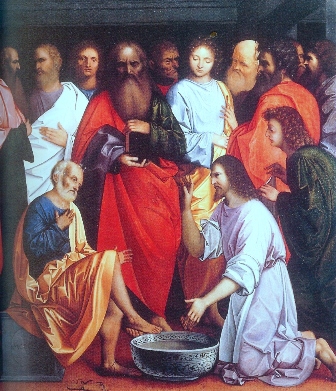
The first 12 chapters of John’s gospel consists of a series of vignettes and cameo appearances.  Every chapter contains one or two.  There is the calling of the disciples, John the Baptist’s declaration, the wedding feast at Cana, Nicodemus coming at night to see Jesus,  the woman at the well, the centurion’s servant, the invalid at Bethesda, the feeding of the five thousand, the great day of the feast, the woman caught in adultery, the man born blind, the parable of the Good Shepherd, Lazarus rising from the dead and his two sisters different reactions.   Then there is the wonderful teaching passages of chapters 13 -16, washing the disciple’s feet, behold I go to prepare a place for you, the True Vine and  the Comforter.  The prayer of chapter 17.  The crucifixion, death, burial and resurrection of chapters 18 – 21.

In all the Gospel of John it is Jesus that we see in ways He cannot be seen anywhere else in Scripture.  There is an intimacy and level of detail about this Gospel that is not found anywhere else.  Jesus’ response to people and events is brought out in all sorts of ways, wonderfully expressed.  For example, Jesus supplied abundance at the wedding feast of Cana, taught Nicodemus spiritual truths in depth, gently elicited the truth from the woman at the well, explained a blindness to the disciples,  wept at the difficulties death had brought to people’s lives.

Jesus is declared to be wonderful things in this gospel:  the Word of God, the Bread of Life, the Resurrection, the Way, the Truth and the Life.

This gospel is wonderful because of its main character purely and wonderfully expressed in its pages – Jesus.

THE Royal Wedding

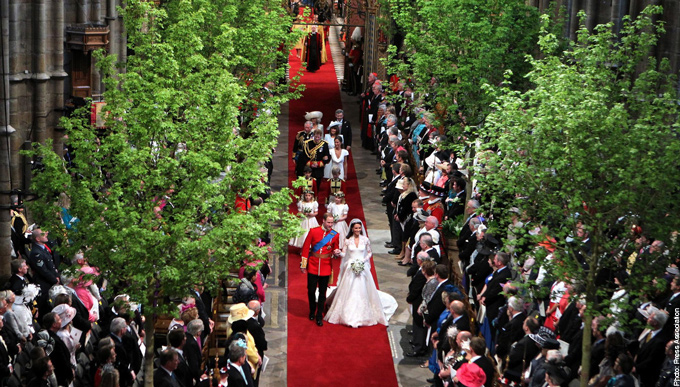
Royal weddings like today’s between Kate Middleton and the second in line to the throne of England, Prince William, come closer than any other event to the Royal Wedding that I am looking forward to.  Kate comes from a family with no hope of becoming royalty because of their background, yet she is chosen by a future king to enjoy all the privileges of the kingdom.  As the bishop who married them said:  “O GOD, who … hast consecrated the state of matrimony to such an excellent mystery, that in it is signified and represented the spiritual marriage and unity betwixt Christ and his Church..” which is taken straight from Ephesians 5:32.

That is going to be a great day and today’s royal wedding gives some idea of the glory, pageantry and celebration of that day.

I wonder how many people though stop to really analyse why a royal wedding with a so-called “fairy tale” element to it should move their hearts so much that even the most cynical observer cannot but fail to have hope awakened in them? That countries should declare a national holiday with celebrations in the streets?  That billions of people should watch and enjoy it – not really understanding why?  Is it rational to have so much joy given the fate of William’s parent’s similar marriage?

But really this is not about Kate and William or their parents.

The only answer to why a royal wedding has such impact really is the fact that God has given to every man some measure of faith (Romans 12:3) or as the Preacher puts it, eternity in their hearts (Ecclesiastes 3:11).  God has indeed ordained marriage, days like today prove that to those with eyes to see.  But even those who can’t see that specifically know something special is happening.

It is more than just a good English pomp and ceremony show that causes them to weep.  Its the possibility that they too could be like Kate.  And that is no fairy tale.

“For God so loved the world that He gave His only begotten Son that whoever believes in Him…..” (John 3:16)

The difference between tolerance and support

Our children go to a Church of Ireland based school.  Most of the schools in Ireland are run on religious lines and the ethos of the school very much depends on the religion that is sponsoring it.  Unfortunately there are very few if any evangelical run schools in Ireland and none near us.  So schools run by Protestant denominations are probably the closest in ethos to what we would believe.  Of course that doesn’t stop them being taught about other religions even to the point of making clay buddhas in school.  In general I have no issue with this, its not as if they are asking my children to worship the buddha or anything. 

Well, usually not. 

Being the 14th means he will probably die like his predecessors

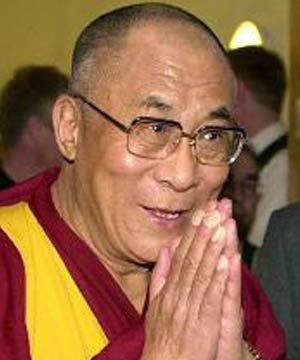
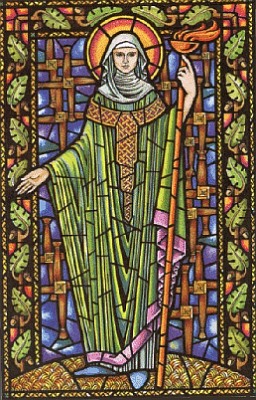
The 14th Dalai Lama is coming to Ireland next week and visiting our home county of Kildare.  Apparently he has a particular interest in Brigid a Roman Catholic saint of doubtful pedigree.  In preparation our children have learnt a particularly suspect song directed to Brigid – who if she was a real human is now dead and so – according to the ethos of the school – should not be sung to.  But you know we’ll put up with that.  Our children have been educated enough to know these things (not by the school though unfortunately) and we don’t want to make a fuss about relatively minor matters.  There are more serious issues in children’s lives than that kind of thing.

No one is really sure if she was a real person or just a christianised pagan deity

And sure, haven’t we been taught to be tolerant?  Isn’t that the message of the Dalai Lama?  What could be wrong with that?

Jesus said:  “I am the Way, the Truth and the Life.  No one comes to the Father except through Me.” John 14:6.

My 10 year old daughter quoted that to me recently when I asked her what she thought about the Dalai Lama.  You see she has a living relationship with Jesus and she has it, she knows, because He suffered a very cruel death so she could. 

If the Dalai Lama is right, the answer of God the Father to Jesus in the garden of Gethsemane to his question: “If this cup can be taken away from Me..” should have been: “It can”.  Because if the Dalai Lama is right there is another way to the Father, in fact more than one.  That makes the Father’s insistence on making His Son go to the cross for our sins the act of either a mad God or a bad one.

So when one of my children is asked to sing to Brigid and to the Dalai Lama I’m going to back him up in his own desire not to be made to go and write a letter to the principal of the school explaining why not.  

Tolerance of other religions is fine but I will not support them. 

The Christian gospel still has some absolutes.

Heaven

Sometimes classical music describes heaven better than words. Faure’s Pavane, Beethoven’s 5th Piano Concerto, Mozart’s clarinet concerto, the list goes on and on. There is something in the eternal depth of the relationships that we will experience, the striking and fantastic adventures, the discovery of new worlds and aspects of creation – all these and many other eternal themes are better described by music than anything else.

I’ve listened long to the news yesterday and today, saddened by the pain and suffering and fear inflicted on so many in Japan. I’ve come to God about it.

Of course His judgements are past finding out (Romans 11:33). We can speculate all we like about the Apocalypse now or God’s judgements on a godless people but in the end we are only seeing the edges of His ways on the earth. Oh, Lord, in wrath remember mercy!

But Heaven, ah, that’s the place. We are probably all going to die (or go to sleep as the bible puts it for believers).  Maybe it won’t be in some catastrophe like in Japan or maybe it will.  Are we afraid of nuclear disastors?  Nations in anguish and perplexity at the roaring and tossing of the sea… (Luke 21:25).

It is always a good thing to remember what is coming afterwards.

If you know the good news you know why you don’t need to be afraid and why you are going to heaven.  As a check on your salvation though ask yourself a question:  As a created, reasoning entity – could you be trusted in heaven?  This is another way of asking whether you are really going on with God.  Without holiness none of us will see the Lord (Hebrews 12:14).

As we see these things happening we know that the kingdom of God is near (Luke 21:31).  Let’s be ready and encourage one another to be a living active part of it.

Format the same, experience different

I believe it is a sign that the church is being led by the Holy Spirit that I can be in worship one Sunday and be in a march across the county and the next Sunday in a love-in holding hands with angels (ok my imagination, indulge me) and knowing intimacy with the Holy Spirit as a dove (Psalm 68:13).  Yet nothing in the format of the meeting changed – same band, similar songs, mostly same congregation.  God having His way with His people.

I believe God showed me the way He sees things in a measure.  Whereas we hear the sounds and see the sights, He sees the relationships between the people.  No matter how professional the production, if  there is back biting and gossip, discord and anger God sees that.  What is pleasing to Him is the love being shared throughout the congregation.

Visions during Worship

Corporate worship where God is moving in the Spirit is amazing.  I am sure all sorts of things are happening while we worship that we are probably only dimly aware of.  For sure there is more going on than most of us realise.

This morning during worship I had a series of visions – or perhaps imaginings, maybe still valid for all that.   Hopefully the imaginings or visions are of the kind spoken of in Acts 2:17.  So here they are, judge for yourselves:

During the first part of the worship I found myself in the Spirit accompanying the Lord’s army going around Kildare from pagan high place to well taking them for the Lord.  There were not too many and the battles were not fierce though real enough for all that.  We raised some from the dead during that phase.

Afterwards I was shown another vision, this time of the religious strongholds throughout the county.  These were far more numerous and far more effective in keeping people bound in darkness.  They were like a grid upon the county, like a lattice keeping people in their graves. 

Then we got ready for battle and passed through the county breaking down the religious strongholds and releasing people out of their graves, raising them from the dead.  These battles were fierce and difficult.  Sometimes we had to fell the towers, putting a sledgehammer to the bases of them.

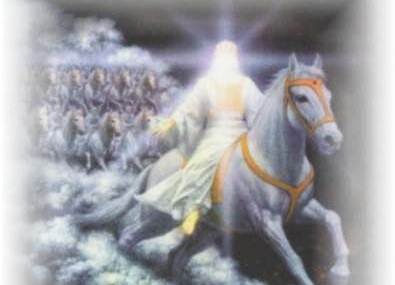
In the final phase there was a victory ride through the county following Our Lord on horse back, He of course on a white one.

Books and the Bible: The Shack

I’ve spent the last many years not reading books except the Bible and those connected to work with few exceptions (The History of the Decline and Fall of the Roman Empire by Edward Gibbons being one notable one).  However this year instead of my normal reading of the bible in a year (like for the last 30 years) I’m listening to it for most of the 2 hours every working day I spend travelling to and from work in my car.  The version I listen to is the excellent Word of Promise dramatised NKJV version which I would highly recommend.  The MP3 version is compact and great value.  I reckon I’ll have listened to the New Testament three times and the Old Testament twice at least before the end of the year. 

Another reason I haven’t been reading books is that I’ve found since children entered the equation I’ve wanted to prioritise my time.  Reading can be a rather solitary and selfish pastime if indulged in as much as I like to.  But with the time in the car freeing up reading time I have time to read some other books.

I believe God put The Shack my way for this time.  It’s been in the house for some months.  I started to read it over last weekend and found it hard to put it down and finished it on Monday evening.  I reckon I’ll read it again at least once which for me is the strongest recommendation I could give any book since I never do that except for the Bible of course :-). 

It is hard to explain why a book with so many so obvious heresies – some might say blasphemies – (God the Father being portrayed as a black African American woman being one of the more obvious ones) should be so witnessed to by the Holy Spirit when I’m reading it.  I guess He isn’t quite as defensive as we might be.  Maybe He feels He doesn’t have to be defensive.  I also believe God the Father can appear in any form He wants to to anyone, as obviously the authors of The Shack do too.

The section that stands out most for me and, on the surface at least, blessed me the most is the part where Mack is interviewed by Sophia, the personification of wisdom.  I won’t spoil it for those who haven’t read it.

The Shack in combination with other events in my life at this time has left me with a deeper sense of God’s grace than I can remember experiencing before.  I feel more loved than ever.  It was definitely the right book at the right time.  I confess that had it come at an earlier time in my walk I may have been tempted to condemn it.  By earlier I mean last year…..

My apologies to anyone who has felt judged by me in the past.  Perhaps the biggest legacy The Shack has left with me is a realisation of just how much I’ve done that, how much it was a part of my approach to life and how wrong it is.

30 years since I was born again.. so what?, read the bible every year..pooey, listen to it for up to 2 hours a day… phoney.  All useless unless infused by love and grace.

Never mind, we’ll get there, won’t we Jesus?  Yes, He believes in me.

Forgiveness

From chapters 9 – 11 of Romans, Paul wrestles with the mysteries of pre-destination.  Finally at the end he seems almost to throw his hands up in the air and admit he can’t explain it.  This reaction seems triggered by the remarkable conclusion he comes to in Romans 11:32:

“For God has committed them all to disobedience, that He might have mercy on all.”

I was listening to Luke 7 in the car on the way to work and struck again by the words Jesus spoke to Simon the Pharisee:

“..to whom little is forgiven, the same loves little.” (Luke 7:47)

I believe now that the reason Jesus gave the Pharisees such a hard time was to make them realise, if at all possible, that they were just as bad as any prostitute.  Only by realising this could they be forgiven much and so love much.  In the light of the infinite holiness of God, we are all sinners to the same degree.  It is just that some of us have a hard time realising it.

Blessed is the man or woman who is forgiven much (Psalm 32:1).

If you see it you will remember it…

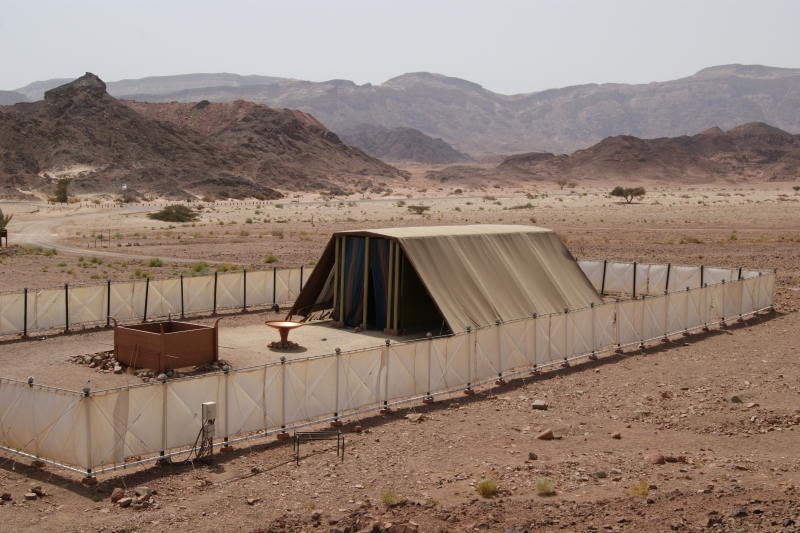
When it comes to visual aids God is no slouch.  Knowing us like He does means that He also knows how to get a message across in a 3D visualisation.  One of the best of these is the Tabernacle.

But what was the Tabernacle?  There are a few ways it could be described but my favourite is from Hebrews 8:5 – a copy and shadow of the heavenly things.  Hebrews 9 further elaborates on this particularly in verses 23 to 24:

“Therefore it was necessary that the copies of the things in the heavens should be purified with [blood of animal sacrifices] but the heavenly things themselves with better sacrifices than these.  For Christ has not entered the holy places made with hands which are copies of the true but into heaven itself, now to appear in the presence of God for us”

Well if it is a copy of the true then the true must be like it, right?  So to look at the tabernacle is to look at a copy of heaven, the real thing.

Moses looked into heaven when he was on Mt. Sinai (Exodus 24 -32, 34).  Stephen looked into it when he was being stoned (Acts 7:55, 56).  Here is a list of others who have seen it:

  • Isaiah 6:1-7
  • Ezekiel 1
  • Daniel 7:9-14
  • Zechariah 3, 4
  • Paul in 2 Cor. 12:2
  • John in Revelation 4 -20

These – and others  –  all saw the same place and recorded various elements of it.  Some described things Moses wasn’t told to represent, e.g. the four living creatures.  Others saw the same things but described them differently.

So here is a question:  What was God’s original purpose for the Jewish people?  Here’s a hint:  it’s the same purpose He has for the Church today.  The answer is in Exodus 19:6 and 1 Peter 2:9 – we are a kingdom of priests.

Jesus is central to the whole thing.  Our eternal High Priest, He took His own blood into the true tabernacle which is not of this creation.  Hebrews 9 gives the details.  Daniel also hints at what happened when he saw “One like the Son of Man” present Himself to the Ancient of Days in Daniel 7:13-14.  And because Jesus has gone into heaven so can we.  In fact we can enter the Holy of Holies because Jesus has removed the veil that was in front of the Father’s presence.

Apart from being a copy of heaven, which is amazing in itself, the tabernacle has many other things to teach us.  I’m going to choose two fundamental ones: 1.  Becoming a Christian, 2. The main practices of the Christian Life.

1.  Becoming a Christian.

 So what are the stages to becoming a Christian?

The Narrow Gate

You need to enter through the narrow gate at the front of the tabernacle (Matt 7:13-14).  There is a picture here of passing from one dimension to another since it is through this narrow door that we enter into (the copy of) heaven (John 10:7).  Jesus also called it being born again (John 3:5).  Birth is a picture of passing from one place where we breathe and ingest one type of substance (water) to a place where we breathe and ingest quite another (air).

The Cross

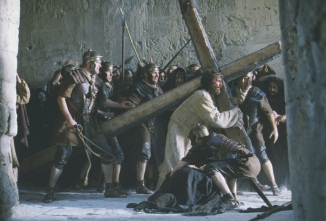
Then the Cross (the big bronze altar) is the first thing you see  (Hebrews 10:10-14, 1 Cor. 15:1-4, Isaiah 53).  It’s also the thing God sees.  That altar is too big for us to sacrifice on, there was only one offering good enough and Jesus supplied that with His own body once for all.

Baptism

Baptism (in the Spirit and in water) is represented by the bronze laver or sea.  The first time a priest entered the holy place he had to be completely washed (Exodus 40:12, c.f. Romans 6:3-7).  After that he only needed to wash his hands and feet before he went in (c.f. John 13:10).  Water baptism is our response to the gospel, the testimony of a conscience cleared (1 Peter 3:21).  Spirit baptism is a work of God.  Some people say it is a second experience after being born again, some say it is the same as being born again.  Personally I think the Scriptures point to the second interpretation.  Whatever you believe about it just make sure you have it!

Now the way is clear to enter the Holy Place and start practicing the Christian life.

2.  The Practices of a Christian.
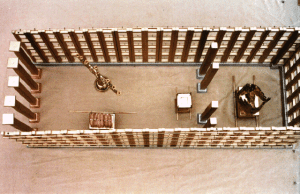
Becoming a Christian means becoming a priest (Exodus 19:6, 1 Peter 2:9).  After the priests in the old testament received their first complete wash, they were clothed in beautiful garments and were able to enter the Holy Place.  When they entered they found three things:

  1. The Lampstand
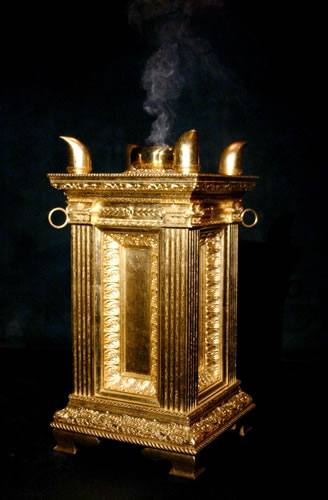
  2. The Altar of Incense
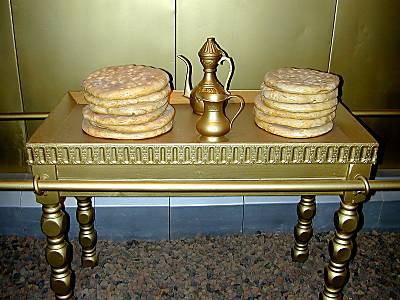
  3. The Table of Show Bread

I believe these three items represent three practices, which if followed diligently will ensure we continue to be a blessing to the God who loved us and our fellow man (Matt. 22:37-40).

The Lampstand
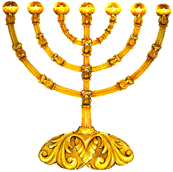
In heaven (of which Moses’ tabernacle was a copy remember) according to Revelation 1:20 the lampstand(s) is the Church.  In particular Jesus walked in the midst of the seven lampstands (local churches) in the New Testament whereas the Old Testament lampstand was just one object.  A lampstand is a place to present a light or, in the case of a New Testament church, the place to present the Light of the World (John 8:12).  It was the job of the priests to ensure that the lamp never went out.  In the New Testament this speaks to us about our role as priests to ensure we do not quench the Spirit (1 Thess. 5:19) and to ensure the light is shining forth to the world around (Matt. 5:14-16) not hidden under a basket.

So the first practice is to be an active member of a local church.

2.  The Altar of Incense
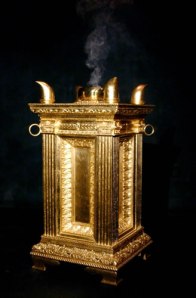
In heaven, according to Revelation 5:8, there was an altar upon which the prayers of the saints rose up before the throne of God.  This is represented in Moses’ tabernacle by the altar of incense.  An altar is a place of sacrifice.  This altar is much smaller than the one outside the Holy Place but it is solid gold and speaks of the sacrifices Christians are called upon to make.  These sacrifices have to originate from relationship with God in prayer and through prayer be continued.

So the second practice is to pray and sacrificially act upon the prayers.

3.  The Table of Show Bread
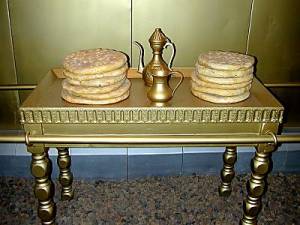
When making the copy of heaven, Moses was commanded to make a table upon which was to be placed fresh bread every day.  Jesus said that “Man shall not live by bread alone but by every word that proceeds from the mouth of God” (Luke 4:4) and there are many references to bread and grain being the word (e.g. Matthew 13, John 6:48 and others).  Bread is refined, milled and ground grain with the chaff removed.  This is rather like the bible but more especially like the word(s) of God spoken to us through fellowship with Jesus.

So the third practice is to spend time with Jesus and to hear His words (Luke 10:38-42).

Where is this all going?

Well one place only really – the throne of God.  Thanks be to Jesus the veil that used to separate us from God is removed (Hebrews 10:19-22) and we can enter the presence of the Most High without fear as children coming to a loving father.

We were made for this.

The sower sows the word

Luke 8:11 explains that when the Scripture talks about seed it  is referring to the word of God.  Its one of those key verses like Rev. 1:20 which explains an object picture that God uses to describe something spiritual.

The parable of the sower in Matthew 13, Mark 4 and Luke 8 is an important one to understand (Mk 4:13).  Seeing our souls as a garden enclosed (Song 4:12) helps.  It is a very large garden capable of growing all sorts of trees and plants.  Just like any garden, if it is left untended it will grow weeds.  The best thing is to clear it, break it up (Hosea 10:12) and sow the word of God.

However there is a more general sense to the parable of the sower.  If we are sowing the word by preaching it (Romans 10:14,17) then we can probably expect 4 types of hearts upon which it will land:  hard ones, stony ones, congested ones and noble ones.  If we look at the parable of the sower in isolation then it would appear that only about a quarter of the people who hear the word produce fruit.

But Jeremiah 23:28-29 gives us some idea of the power of that word and some hope to those who may think their heart is hard, stony or clogged up with the cares of this life:

“Is not My word like a fire?” says the Lord, “and like a hammer that breaks the rock in pieces?”

The fire burns up the thorns and the hammer breaks up the path and stones.  A seed can have tremendous power in even the most adverse conditions.  God’s word is even more effective in the heart.