All posts by faithfulwon

Fellowship with the Saints

The words “fellowship” and “saints” are old-fashioned and rarely encountered in modern Evangelical/ Pentecostal circles.

JRR Tolkein’s first book in the Lord of the Rings trilogy is called “The Fellowship of the Ring”.  Fellowship in that context, and generally, speaks of a group of people united in a common purpose.  The purpose is greater than the individuals and calls for self-sacrifice and submission.

The word “saint” means sanctified one.  In the context of Scripture, Paul writes to the saints at various places as members of the local churches there.  Saints in the biblical context are those who have an ongoing, personal relationship with God in the context of the local church.

Put the two words “Fellowship” and “Saints” together and you have a group of people united in glorifying God through their lives together.

I can of myself do nothing

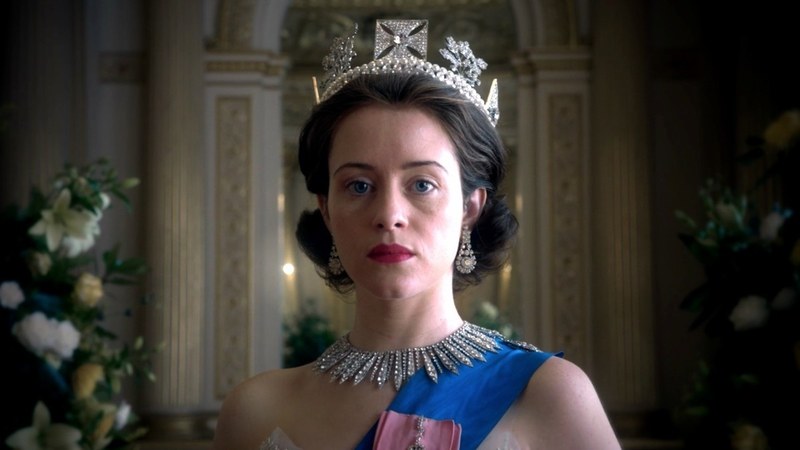
The Netflix series “The Crown” is in season 2 now.  I have got as far as the end of episode 6 of season 1.  I like it since in general it seems to be historically true though with the usual dramatic license taken here and there to emphasize or dramatize an aspect of the truth.

One of the things that is striking about it so far is the self-denial that the Queen has to go through.  She really cannot do what she wants to do.  What is peculiar about that is that she is Queen and so, in theory, can do pretty much anything she wants to do.  In practice she is bound by tradition and duty to a higher standard.   The Queen answers to God ultimately according to that tradition which in itself is based on the bible.  So the constraints on her are those imposed by God (Romans 13).

Jesus expressed the ultimate submission, from which monarchs and disciples derive there submission to God,  in John 5:30:

“I can of Myself do nothing.  As I hear I judge and My judgement is righteous because I do not seek My own will but the will of the One who sent Me.”

To have communion with God and to do His will is to be in self denial.  Jesus says elsewhere that unless we deny ourselves and take up the Cross daily we cannot be His disciples.

Do you want to be a disciple?

If so, will you submit to Him in love and happily give up the freedom to do what you want?

If you have been born again, this is, in fact, the only way forward.

Communion with God

Communion with God is intimacy with your creator.

The wonderful privilege of everyone who has been born again is the possibility of ongoing communion with the Creator of the universe.

As creatures we were made to be vessels carrying a treasure (2 Cor. 4:7).  That treasure is the Holy Spirit.  Intimacy with God is being what we were meant to be, filled with the Holy Spirit.

There is no more intimate picture than a vessel filled with a liquid.  The vessel itself knows nothing but containment of something greater than itself, something which it feels touching every inside surface.  Every so often the Owner comes and tips out the precious substance for someone else’s benefit and then tops it up again to overflowing.  Overflowing is the better state for a vessel.  Then it is not just containment and the inside surfaces that know the joy of intimacy but every part of the vessel, even those parts that are outward facing, feel the joy.

Jesus said that the first and greatest commandment was to love God with all our heart, soul, mind and strength.  You cannot love God in this way if you don’t have intimacy with Him.  You cannot love God in this way unless you are filled with the Holy Spirit.  You must be born again, yes, but you must also yield and let Him fill you on an ongoing basis.

Dedicate some time every day to intimacy with God your creator.  Hear what He is saying to you.  Do what He says. Repeat daily.

Pathetic Fallacy

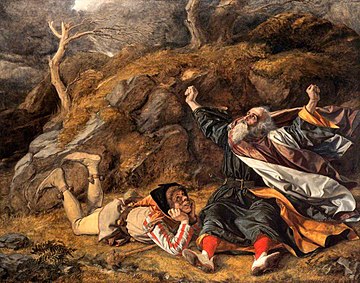
Back when I was doing my Leaving Cert English course Shakespeare’s King Lear was on the curriculum.  I’m not sure was it my teacher at the time or a textbook but one of the phrases used was “pathetic fallacy”.  It referred to Shakespeare’s use of the weather in the play to reflect the action on the ground.  At the height of the worst tragedies that fell on King Lear the storms raged the worst:

“Blow, winds, and crack your cheeks! Rage! Blow!

You cataracts and hurricanoes, spout
Till you have drenched our teeples, drowned the cocks!
You sulphurour and thought-executing fires,

Vaunt-couriers to oak-cleaving thunderbolts,
Singe my white head! And thou, all-shaking thunder,
Strike flat the thick rotundity o’ the world!
Crack nature’s molds, all germens spill at once
That make ingrateful man!”

King Lear, Act 3, Scene 2 by William Shakespeare

So the now forgotten commentator called this kind of matching of the elements to the moral events on the ground “pathetic fallacy”.

The attitude that such connections are pathetic lies is now so ingrained into our thinking that anyone who even remotely suggests in our “enlightened” western humanist society that God might have something to do with the weather is likely to face the worst of scorn.   And, indeed, caution is always advised when attributing any specific elemental actions (e.g. fires, earthquakes, floods, droughts, etc.) directly to God’s judgments especially at macro levels like nations (notwithstanding the fact that these acts are all called “Acts of God” for insurance and other purposes).

However, the bible is quite clear that God is in control of the weather whatever we might be told by English teachers or otherwise.   Here is one example taken from Zechariah chapter 10 in the Old Testament:

“Ask the Lord for rain in the springtime;
    it is the Lord who sends the thunderstorms.
He gives showers of rain to all people,
    and plants of the field to everyone.”

Zechariah 10:1

I have a number of reasons for drawing attention to this current drought and asking the question:  “Is God judging Ireland?”

One of the reasons is that I woke up with a vivid dream this morning.  In it, I was in a train travelling through the hills along the coast.  It could have been from Greystones to Bray or somewhere similar.  On hills away from the coast fires were breaking out all over.  There was a solitary fire man fighting one of them.  I didn’t see any houses go up in flames just gorse and hedges.  But there were a lot of fires and not enough firemen.

To be fair, you wouldn’t have to be much of a prophet to predict that in this weather in this country.

We are all enjoying the fine weather.  Ireland is known for its rain during the summer or indeed at any time of the year and so any respite from rain is usually welcomed by the majority of the people.  However when it comes to judging nations the bible does have quite a lot to say.  Usually judgement comes in the form of an invading force but in Zechariah chapter 14 there is this verse:

 If any of the peoples of the earth do not go up to Jerusalem to worship the King, the Lord Almighty, they will have no rain.

Zechariah 14:17

The context in this case is (probably) the millennium rule of Christ on the earth which (probably) has yet to happen.  However the principle is the same:  When God holds back rain it is not a good thing.

Disciples, Saints and Overcomers

According to the bible, God’s eternal destiny for you is communion with Him and fellowship with the church.  Communion and fellowship starts from when you are born from above (John 3:8) and continues for eternity.  Evangelism, by contrast, just lasts for this life.  After God ushers in the new heaven and earth (Rev. 21) there is no more opportunity for people to transition from the kingdom of darkness to the kingdom of life.  This makes evangelism critically important and if you did nothing else but tell people the good news of Jesus’ death for our sins and resurrection, you will not have wasted your time on this earth.

However, the bible includes a lot about communion with God and fellowship with His people.  As examples, Jesus tells people about the narrow way in Matthew 7, Paul quotes a number of old testament scriptures on the subject of being God’s sons and daughters at the end of 2 Corinthians chapter 6 and John records Jesus’ words on abiding in John 15.  But there are many more examples, in fact, depending on how you read it, you could say the whole New Testament is mainly about these two things:  communion with God and fellowship with His church.

In fact I believe that when God inspired the Scriptures (particularly the New Testament) he inspired them with mainly one class of people in mind.  Jesus called these people “disciples”, Paul went on to describe them as “saints” and John wraps up the New Testament by calling them “overcomers”.   The three words are not synonyms but they are closely related and they also have a sense of progression in them.  Being a disciple/ saint/ overcomer is God’s ordained way of having communion with him and fellowship with the church.

According to the New Testament, if you want communion with God and fellowship with the church then you must be born again, be a follower of Jesus (a disciple), be made holy (a saint) and persevere to the end (an overcomer).

Evangelism, Communion and Fellowship

Jesus spelt out the way of connecting people to God when He told Nicodemus that “You must be born again”.  You can find an account of His conversation with Nicodemus if you read John’s gospel, chapter 3.

According to the bible, the aim of church should be to tell as many people as possible about the good news that God through Jesus Christ has reconciled the world to Himself (2 Corinthians 5:9).  Jesus is the only way to eternal life or heaven (see John 14:6).  Unless you are born again you cannot even see the kingdom of God, never mind enter it and live for ever (John 3:3).

So you must be born again (John 3:5).

There is a very good case for leaving it at that.  If us Christians all just spent our time bringing everyone we knew to the place where they were born again – or at least presented with that possibility – we would have spent our lives very profitably.  This approach to life is called evangelistic and some people who meet God are called to it almost exclusively and everyone who calls themselves a bible believing Christian is called to it to at least some extent.

However the bible has a lot more to say about what it means to be a follower of Jesus after that initial, critical, connection has been made.  If you have been born again God wants you to have two things that he talks a lot about in the bible: Communion with Him and fellowship with others who have been born again (i.e. with His Church).  The Scriptures spend a lot of time dealing with this.

Communion and fellowship are eternal (see, for example, John 17).  Once you are born again and transferred from the kingdom of darkness into the kingdom of life (Colossians 1:13), communion and fellowship is your eternal destiny.  It is where God wants you to be now and forever.

The Majority are Often Wrong

About 400 years before Christ came and made His rather dividing remarks about mankind, Plato wrote his book “The Republic” and called attention to the problems with democracy.  Many writers have done so since.  So Jesus is not alone in His thinking when He says:

“…..wide is the gate and broad is the road that leads to destruction, and many enter through it. 14 But small is the gate and narrow the road that leads to life, and only a few find it.”

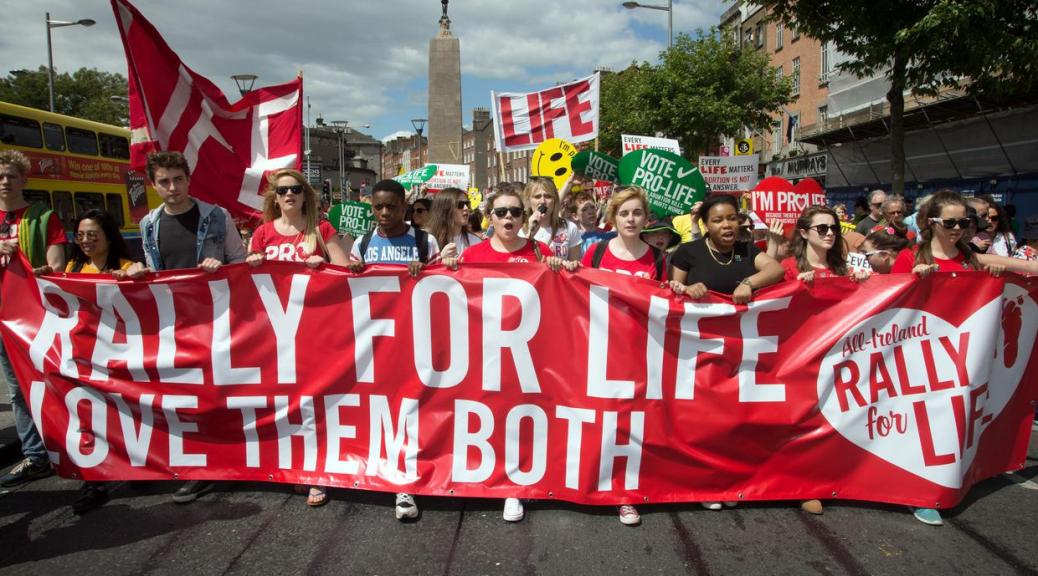
These words from Matthew 7:13, 14 have a particular relevance when we think of how the majority of this country last Friday (25 May 2018) voted for destruction whereas relatively few voted for life.  One of the good things to come from that vote was this confirmation of Jesus’ words.  We would do well to believe Him when He says things.

He also said: “I am the Way, the Truth and the Life. No one comes to the Father except through Me.” (John 14:6).

You will do better to ignore and reject the “liberal” spirit of this age and believe this instead, however “intolerant” it sounds.

Here is another passage from the bible that says something equally unpopular but also relevant:

“Cursed is the man who trusts in man
And makes flesh his strength,
Whose heart departs from the Lord.
For he shall be like a shrub in the desert,
And shall not see when good comes,
But shall inhabit the parched places in the wilderness,
In a salt land which is not inhabited.

“Blessed is the man who trusts in the Lord,
And whose hope is the Lord.
For he shall be like a tree planted by the waters,
Which spreads out its roots by the river,
And will not fear when heat comes;
But its leaf will be green,
And will not be anxious in the year of drought,
Nor will cease from yielding fruit.

Jeremiah 17:5-8.

Black Friday

“Black …. day” is a term used for the day there is a major fall in the stock market.  The last “Black” day for the stock market was Black Monday Oct 19, 1987.

In contrast with the gradual and persistent climb in stock market values over many decades, days like Black Monday are sudden, precipitous and often unexpected.  They also cry out for attention and, in a similar way to all bad news, they can enter our consciousness much more than the gradual improvements that we experience over much longer time periods.

The results of yesterday’s referendum will have come as a shock to many.  They also represent an enormous blow to the efforts of so many people who have poured time and money into campaigning to keep the 8th.  Many of my friends will have lost sleep and spent money and time sacrificially.  They did what they could and now they should rest content that they have done all that could be done.  Their consciences are clear.

I know it doesn’t seem like it now but actually, if you take a longer view then things are getting better in this country as they are around the world.

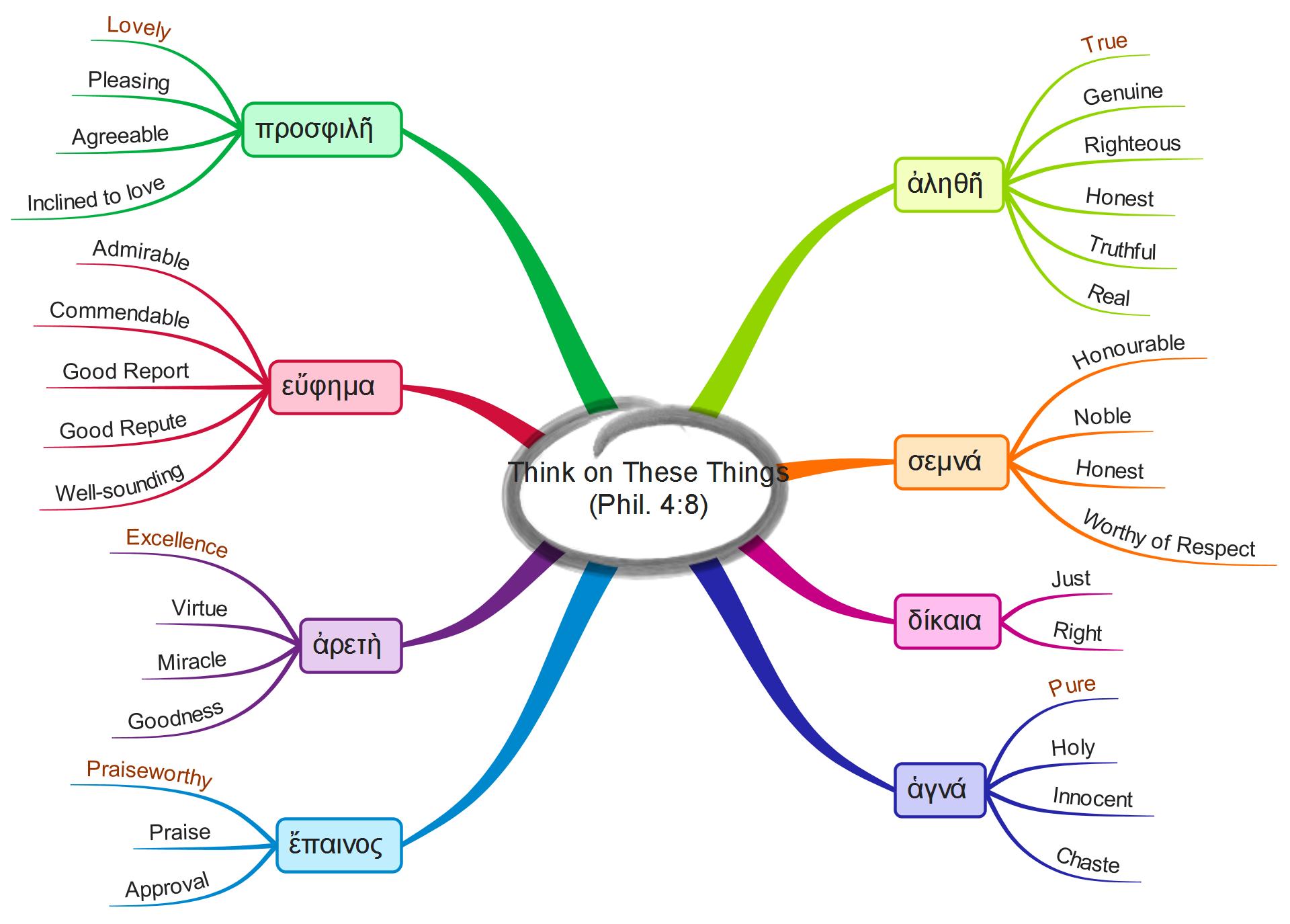
Recently I have been challenged (by the Holy Spirit) to focus my mind on the things of Philippians 4:8: things that are true, noble, just, pure, lovely, commendable, excellent and praiseworthy.  On a day like today this becomes more important than ever.  Here are some things to think about:20180525_115433

  1. God:  He is all of the above.  Think about how much He loves us in that He sent His only Son to die on our behalf.  The gospel is every bit as much good news now as it was before the referendum.  A relationship with God is the ultimate answer to any wrong attitudes society may have.  This referendum has led to many people thinking about God and the Good News in ways they haven’t done before.  Only God really knows the hearts of people but there are many indications that, as a percentage of the population, more people know God personally now in Ireland than in the past and that percentage is actually growing.
  2. Family: The basic unit of society still applies to 100% of the residents of this country.  All of us have (or have had) a father and a mother and many have brothers and sisters.  We love them and they love us.  Nothing in any referendum results has changed that.
  3. Friends: Everyone knows someone they can call a friend, someone who accepts them as they are without judging them.  We all need them.  One of the major plus points of this and the last referendum has been to encourage a non-judgmental attitude in the population at large.  More people are accepted by more people as people than ever before.  There will be a change in the constitutional status of many of those people and that is to be regretted.  But a society that accepts people more will inevitably accept them at whatever stage they are, in the womb or outside of it and in whatever condition they are in, disabled or well.  Most people voting yes in this referendum were not voting for abortion, they were voting for acceptance.  I wonder how the result would have gone if the referendum had been phrased in such as way as to say “Vote “Yes” to retain the human rights of the unborn and vote “No” to remove them”?
  4. Honesty:  People are not as afraid as they were in the past to be honest about what they really think on many formerly taboo issues.
  5. Creation:  The sunsets are still lovely, the rhododendrons at Russborough House are as beautiful in May as ever, of all the things you may see still few are as beautiful as a tree.  The increasing consciousness of everyone about looking after their environment has made Ireland a more beautiful place than ever.  I walk down to the end of my road and see beautiful eagles and kites which, only a few years back, did not exist here.  This is progress by this generation of young people.
  6. Excellence because of opportunity:  athletes, figure skaters, football players (even) and any sport you can think of has become more inclusive, better funded, less dangerous, more participated in and more attractive and available to watch over the last 100 years.  Consistent, upward, progress is the hallmark of the Olympics and many international sports and, again, is led by young people.

I could go on.

It is a bad day, but it is not the end of the world.  Actually that would be a good day too for many.  We need to concentrate on ensuring that these last days continue to be truly good days for as many people as possible.

I still don’t know a better way of doing that than telling them God loves them, unconditionally and at great cost to Himself.

Well done to all my friends who have gone to great extremes to get that message out there about the most vulnerable in society. People may have voted for compassion in a way that looks counter intuitive to many of us but they also know more about the preciousness of the unborn than ever before.  Let’s build on that.


Think on These Things

I have been taking a leaf out of Dr. Caroline Leaf’s book (sorry couldn’t resist that pun): “Switch on your Brain” and used a mind map to do a 21 day meditation on a single thought.

In this case the thought is Philippians 4:8:  “Finally, brethren, whatever is true, whatever is honourable, whatever is right, whatever is pure, whatever is lovely, whatever is commendable; if there is any excellence or anything praiseworthy; think on these things.”

In the mind map above I have taken the 8 words from the original New Testament Greek and put them in boxes around the central theme of the verse.  Then I have taken the most common translations of the Greek words and listed them against each box.  The words in a different colour (e.g. “true”) are the ones used most often, or, in some cases, exclusively by the main English translations (NIV, KJV, NKJV, NLT, NASB, ESV, NRSV).

I have also been spending quite a bit of time adding to the branches the things that are actually true, honourable, right, pure, lovely, commendable, excellent and praiseworthy.  It is quite amazing the amount of things that fall under those categories once you start to expand on them.  There are numerous elements to God, family, church, the bible, work, creation, music, books, films, etc. that fit into each category.  In other words, there are plenty of good things to think about.

Caroline’s basic thesis is that mind is over matter.  More specifically she says that thoughts are manifested in our brains as actual matter.  They grow on brain nerve endings like fruit on trees.  If we spend 21 days thinking on the same thing, that will turn it into a solid ripe piece of brain fruit that can modify your behaviour. Like it says in Romans 12:2: “Be transformed by the renewing of your mind.”

She advises that you hear what the Spirit is saying to you about a toxic thought to replace and what to replace it with.  Her book is well worth a read and implementation.

Biblical Creativity: Summary

God’s creation is wonderful as any, even cursory, look over it will reveal.  I have really enjoyed meditating in depth about the 6 days of creation as it is literally revealed in Scripture.  It seems every day I spend some quality time with God on this subject I get a new insight.

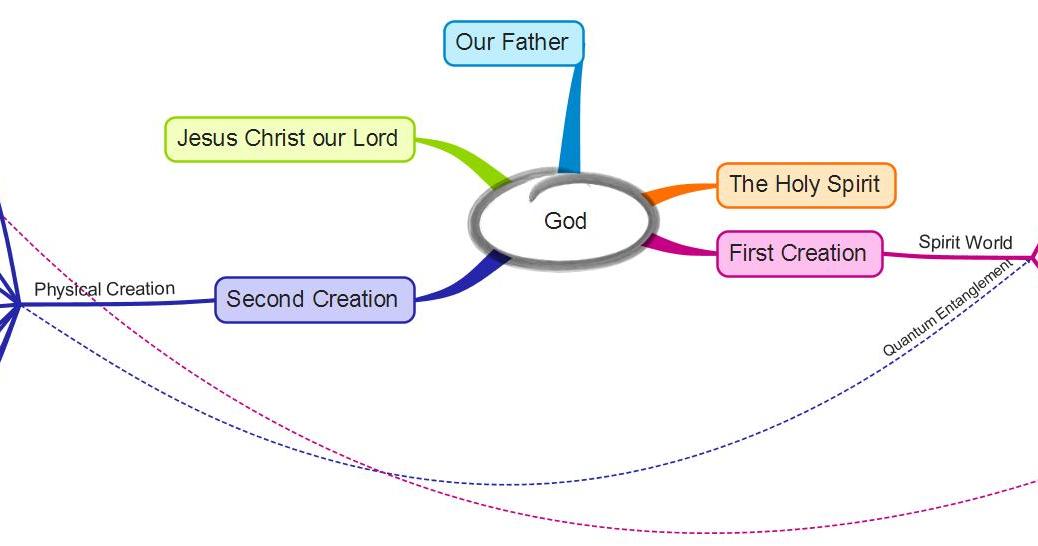
However, I realise that it is hard for any reader to understand the journey I have gone on with Jesus to get to this point.  I doubt if anyone is as excited as I am about the connection between the Sea in Heaven and the water present at creation. Or the fact that quantum physics has been explaining (since the beginning of the 20th Century) some of the connections between the physical and spiritual creations (e.g. quantum entanglement – the relationship between two entities that transcends space and time including the speed of light).

But for those who are still interested here are a couple of mind maps summarising what I have written in this series so far.

Of course you may not agree with the above.  Personally I’m a young earth, 6 day literalist currently which probably means I’m mad as far as many people are concerned.  But I didn’t always hold this position and I would hope that I’m open to having my mind changed on such secondary matters.  The truth about these things matters but not as much as the truth of Jesus’ Resurrection for instance.

Either way I’ve really enjoyed taking the Genesis account literally, matching it with what I know of science and, as a result, getting some neurons connecting in ways they wouldn’t have otherwise done.  God knows whether I am discovering some of  His thoughts in the process, or whether I am, in fact, mad 🙂

Physical Creation

In my blogs on Biblical Creativity to date I have tried to understand what God would have had to do to create something from nothing.  This includes trying to understand what the word “thing” means when there was no such “thing” before any “thing” was created.

It seems that water was there before anything else.  If the spiritual was created first then that water could have been created as the Sea before God’s throne in Heaven.  Formless and void at first, it was the womb from which everything else physical had its birth.

Day 1: We now know that light is a phenomena which has an electric and magnetic component to it mixed in such a way (with a precise range of frequency and wavelength) that we can see it.  It is just a small part of a much larger range of similar possible EM phenomena much of which we use in communication.  Once light was created, we perceive its absence as night.

Day 2: Once God created objects He created the space between them as a immediate consequence.

Day 3a: It seems to me that the idea of physical movement is only introduced at this stage.  One of the most common movements is spinning and that could have been used to separate out the land elements from the overall watery mixture.

Day 3b: Plant life is created before the sun which is just a strong source of the narrow band phenomena called light.  I’m not sure why God did it that way (or got it recorded it in this order if you like) but maybe He couldn’t wait to start doing something that He knew we would enjoy.

Day 4: He stretches out the heavens.  The macroscopic and microscopic levels are the best places to look for contradictions to any simple mechanical understanding of the universe or ourselves. Einstein found them at the macroscopic level and described them in the theory of Relativity and Bohr found them at the sub-atomic layer and described them in quantum physics.  Quantum physics helps us understand free will through Heisenberg’s uncertainty theorem for instance (see Dr. Caroline Leaf’s excellent work for more details of this and other connections between quantum theory and the Bible’s descriptions of spiritual realities).

Maybe one day I’ll write a book about it all.

Well done if you’ve read this far.