Category Archives: church

Includes what it means to be a saint. Material for a lesson in the His Story module of Life College.

Word Study – “Sick”

Grasping God’s Word – Assignment 9-5

1Is anyone among you in trouble? Let them pray. Is anyone happy? Let them sing songs of praise. 14 Is anyone among you ill? Let them call the elders of the church to pray over them and anoint them with oil in the name of the Lord. 15 And the prayer offered in faith will make the sick person well; the Lord will raise them up. If they have sinned, they will be forgiven. 16 Therefore confess your sins to each other and pray for each other so that you may be healed. 

James 5:13-16a

The Greek word for sick – ασθενει – in this context is transliterated: Astheneo

Strong’s number: 770

It is used 33 times in the NT:

  • Sick (19 times): Matthew 10:8, 25:36, 39; Mark 6:56; Luke 4:40; John 4:46, 5:3, 7, 11:1-3, 6; Acts 9:37, 19:12, 20:35; Phil. 2:26-27; 2 Timothy 4:20; James 5:14
  • Weak (14 times): Romans 4:19, 8:3, 14:1-2; 1 Cor. 8:11-12; 2 Cor. 11:21, 29, 12:10, 13:3-4,9;

From the contexts in other passages it would appear that this word could as easily be translated “weak” as “sick”.  In English these two words are quite related but our understanding of the microbes that cause sickness make us more inclined to separate the meanings than would have been the case for people in James’ time.  If we use “weak” instead of “sick” in James 5:14 we have:

“Is anyone among you weak? Then he must call for the elders of the church and they are to pray over him, anointing him with oil in the name of the Lord;”

When we take the overall context of James 5:13 -16 we can see there is a connection between being weak, or sick, and sin.  The effect of the elders anointing is not just to make the person well physically but also spiritually – his sins will be forgiven.  In verse 16 the key to healing is that you confess your sins to each other and pray for each other.

In verse 15 the word translated “sick” is actually a very different word (κάμνοντα) which is only used one other time, in Hebrews 12:3, and there it is translated “weary”.  So if you feel weary confess your sins to each other and pray for each other and you will be healed.

Nowadays we are inclined to view disease and sickness differently from James.  For us there is only a tenuous connection, if any, between our personal actions and sickness.  Sickness is caused often by viruses or bacteria which seem separated from our moral actions.  As a Christian in the 21st Century the connection between sin and sickness is less personal, more related to the general fallen condition of the world than anything that we personally may have done.  But if you think in terms of sickness being weakness and put yourself in the context of a 1st Century Christian who knows nothing about viruses and bacteria then you might see the connection between personal sin and weakness or sickness more easily.  This also explains Paul’s warning about taking communion in an unworthy fashion (see Thoughts on Communion: Healing and The consequences of communion).

Things can come around though.  The bible’s wisdom does not seem so archaic in this regard if you are into holistic medicine.  Lifestyle and a tendency to sickness go together.  If your lifestyle is one of abusing the body through excessive alcohol or smoking or immorality then it is easy to see how those sins can affect your health also.  Other sins such as worry and anger also have physical effects causing illness or weakness or both.

In this passage though the emphasis is not on the sin causing the illness.  The Lord is gracious and he heals first and, then, forgives your sins also.  He doesn’t place the emphasis on the sin but rather on the healing of the sickness or weakness.

Which is just like Him, isn’t it?

Living on the edge of heaven

I have a dear friend and I’ve benefited from his wisdom, prayers and friendship for nearly 35 years now.  He suffers from a life threatening condition that could send him home at any time – he has already lived well beyond the expected life span of people with it.

I called over to him  yesterday.  We have this arrangement where I give him a call and if he is there and well enough (did I mention that the condition leaves him constantly tired?) I pop in for a chat.  Or rather I come to spend time in the presence of someone living on the edge of heaven.

It is remarkable how much blessing can come from being with someone like my friend in such a short time.  He seems to be always hearing from God.  Even though my last visit hadn’t been for over 9 months, and he didn’t know I was coming until a few minutes before I arrived, God had been speaking things to him the day before that were what I needed to hear.  During our conversation he also spoke other things that encouraged me.  And of course he listened more than he spoke.

Some day, any day now, he will walk from the edge of heaven straight into the middle of it and there will be no gap between the two.  And in one sense not much will have changed, he will just  be that little bit closer to the One he loves than he is now.

Apostolic Ministry Today


Many people consider the 12 apostles as a class apart into which they substitute Paul for Judas. That is backed up by the fact that John says that the wall of the “the holy city, Jerusalem” which descended from heaven had twelve foundations on which were the names of the twelve apostles (Rev. 12:14). However the term apostle is used in a more general way as well. For instance in Romans16:7 two people are mentioned (one a woman) who are called apostles but don’t belong to the twelve.

The word apostle is a direct transliteration of the word “apostolos” in Greek meaning “sent out one”. In Latin the word is “misseo” from which we get the word “missionary”. Our common use of the word “missionary” to describe someone sent out from the church to plant (or assist in planting) churches elsewhere has no parallel in Scripture other than in the use of the word “apostle” since it means the same thing and would have been read in that way by the original readers of, for example, Luke 10:1:

10 After these things the Lord appointed seventy others also, and sent them two by two before His face into every city and place where He Himself was about to go.

So when I say I believe in apostolic ministry today I am saying that I believe that every missionary sent by God to plant churches is partaking in an apostolic ministry today. Some missionaries are not sent by God and others are assisting in church growth by bringing another gifting to the place they are sent to such as prophecy (often manifested in preaching), teaching, etc. (see 1 Cor. 12: 28-29, Ephesians 4:11-12). So the word “missionary” as we commonly use it does not just include the apostolic ministry but these other ministries as well.

There are therefore much fewer apostles (in the biblical ministry sense) who are missionaries than there are missionaries in general. However I believe that this ministry does exist and is happening today all over the world.

Of course people are free to disagree with me on this. I believe the Scripture in our age of grace is not prescriptive on such

matters. The Holy Spirit doesn’t mind much what you call yourself as long as you are working with Him and not against Him in His purposes. Better to be working in the field planting churches or assisting them than sitting around discussing what you call someone who is!

Why Egypt welcomed Islam – a bit of church history

Or this could be titled “One of the reasons I hate religion”.

Until the 4th Century AD it often cost your life to be a Christian.  There were 10 severe persecutions of Christians all over the Roman Empire starting with Nero in AD 60 and ending with Diocletian.  You thought twice before becoming a Christian since there was every chance you could lose your life, possessions and loved ones if you did.

However that all changed when Constantine embraced Christianity around AD 318.  The Edict of Milan of that year legalised Christian worship, later it became compulsory to be a Christian!  Now, not only was there no state organised persecution, it was actually of great benefit to your career in any government post to be a Christian.  Add to that the fact that there was no separation between church and state and you no longer had to think twice before declaring yourself a Christian and everyone was doing it.

Both Jesus and Paul had warned about “wolves in sheep’s clothing” rising up from among them and not sparing the flock (Matthew 7:15; Acts 20: 29, 30).  And so it turned out.

The next several hundred years are characterised by huge amounts of religion and very little true Christian discipleship.

The head of the “Roman” empire moved himself to Constantinople and was effectively taken out of the way so that another head could arise –  the Pope in Rome.  However he wasn’t the only “head” at that time, there were four of them:  The Coptic Pope based in Alexandria, Egypt; the Syriac Patriarch based in Antioch in present day Turkey, the Greek Orthodox Patriarch based at Constantinople as well as the Roman Catholic Pope based in Rome.

Each of these four heads divided up the Christian world based on 4 views of the divinity and humanity of Christ.  I can’t tell you what the different views were, I suppose I should know, everyone at that time seemed to know which side they were on.

What has this to do with Egypt welcoming Islam?  Bear with me, we’ll get there.

At one of the Councils in the middle of the 5th century the then head of the Copts led an army of his followers into Constantinople.  He did this in an attempt to force their particular view of the nature of Christ down the throats of the others who had gathered there and so gain power over the Roman Empire.

In response the emperor of the day backed the Patriarch of Constantinople with a fleet and an army and imposed their view on the Copts instead.  All of Egypt – 20 million people – was ruled by Greek Orthodox governors with the Emperor’s fleet in the bay at Alexandria to help keep them in line.  (See the History of the Decline and Fall of the Roman Empire by Edward Gibbons Vol. 4, Chapter 47).

Do you think God was pleased with all this bickering?  Well it would seem not.  About the beginning of the 7th century, Mohammed and his followers began to gain power.  They became fanatical and, inspired by a religious zeal backed by direct revelation from an angel, their armies quickly gained the upper hand over the bickering and divided Christians.  It didn’t take them long to leave Arabia and conquer a vast swathe of land, all of present day Jordan, Syria, Palestine and Lebanon, Iraq and Iran and parts of present day Turkey.    In the process the Patriarch of Antioch and all his followers came under Muslim domination.  There is still a remnant left today of the Syriac church in the region but not much.

An army of 100,000 fanatical Muslims drew up near the border with Egypt and stopped.  There was no way they were going further with 20,000,000 Christians in front of them.  Or was there?

Cue, the welcome.  The Coptic Egyptians saw this impressive army and thought they could do a good job of overthrowing their unwelcome Greek Orthodox overlords.  So they invited them in (see Gibbon’s History referred to above chapter 51).  The well motivated Islamic army conquered the Greek army and sent the fleet packing.  Egypt came under Islamic rule and over the centuries since the population was pressured through discrimination to turn from being Christian to being Muslim.  Today 85-90% of the 100,000,000 people in Egypt are Muslims.

Eventually, the third head -that of the Greek Orthodox church and its capital Constantinople – fell to the Muslims in the mid 15th century.  This left only the Roman Catholic Pope left.

And that, my friends, is how Egypt welcomed Islam.  A sorry reflection on organised religion and no sign of the love of Christ anywhere.  This period was the beginning of the Dark Ages which were dark at least partly and probably mainly because of a great apostasy from Christ’s teachings (2 Thess. 2:3) even though there was plenty of so called “Christian” religion.

The similarities with the present state of Evangelical religion in the West should be obvious.

The Safeguards of the Christian Faith

Faith is a gift – or so the Bible says in Ephesians 2:8 – and faith is substance and assurance (Hebrews 11:1). So those with faith might not require much else. They believe in Jesus having, like me, that assurance in their hearts where they can hear and feel the Holy Spirit. The other side of that though is that they can be deceived. So God has put in place two other things to help, the Scripture and the Church. So we have three things which keep us on the straight and narrow so to speak.

Here is a check for the church or group you are in:

Do they honour the personal in dwelling Spirit of God in you (1 John 4:2) and do they honour the Scripture ?

Some big groups do not: churches with a clergy say you cannot know God safely unless you are guided by clergy.  Some would rather you did not read the Scripture at all but let it be read and interpreted to you through the same clergy.

Sound familiar? So they remove two safeguards and leave you with only one. And what if that turns out to be corrupt?

The consequences of communion

  or   

Paul’s observations on what happened when people didn’t discern the body of Christ during the breaking of bread or Lord’s supper or communion as it is sometimes known (1 Cor. 11:30) can be better understood if we look at the historical understanding of disease at the time and now.  Now we understand the concept of germs and contagious diseases but then such things were not understood at all.

However Paul was able to observe something happen and come to conclusions.  Communion meant sharing a common cup and bread (1 Cor. 10:16,17) then.  Nowadays we don’t normally do that, at least in large congregations.  The reason we don’t  is because we know that is how germs are spread.  But at a time when that was not understood, the connection between falling ill (or sometimes dying) and sharing a common cup would not have been so understood.  However Paul observed this happening in some churches.  And it would seem it was churches like Corinth who seemed most lax about how they observed the Lord’s supper that this happened in the most.

Now let’s take this argument one (admittedly controversial) stage further.  He says that believers in some cases were ill after communion because they did not observe the Lord’s body (1 Cor. 11:29).  In general believers will not be leading a promiscuous lifestyle.  Contagious diseases in particular are picked up by a promiscuous lifestyle.  So if the body is discerned and those who are outside the body in general are convicted enough by the self examination not to partake in the breaking of bread then that reduces the risk of the spread of contagious disease through sharing a common cup.

Of course there is not a one to one correlation between not having contagious disease and being a Christian – most everyone gets a cold at some time – but you can see how this might work out in practice even at a simply natural level.  Then if you take into account God’s divine intervention on behalf of His people …

Lessons in Maturity: Lactose intolerance

Here is an offbeat observation of real life imitating Scripture at a physical level: Lactose intolerance is standard as people mature unless it is removed by adverse conditions.

In Northern Europe over many generations the gene that normally activates lactose intolerance was removed by natural selection due to the dependence on cow’s milk in the colder climates. Hence the fact that all major races except Caucasians (and some East Africans) are lactose intolerant after breastfeeding age.

So it is natural to mature beyond milk at least in the physical.

Is the western dependence on spiritual milk among Christians with years of a Christian walk likewise evolved and unnatural?

Pruning Fruit Trees

We only have two fruit trees in our garden.  We have had both of them for going on four years now.  Neither I nor my wife would consider ourselves horticultural experts.  Indeed about the only things I know about looking after fruit trees I learnt from reading passages in the bible.  Particularly John 15.

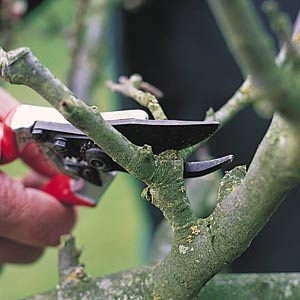
So inspired by John 15 I took my secateurs (just like in the picture) and set to.

I first went looking for fruit.  One of our trees is a pear tree and it has never borne us any fruit.  I don’t blame it really, it was supposed to be pruned and trained along the wall.  Nevertheless this year it is showing some signs of fruit on one branch.  Maybe I was wrong but I didn’t have the heart to prune it much since it seems quite weak.  I thought it might find the shock of severe pruning too much and die on me.  But I did get rid of some new growth.

The other tree is some kind of edible cherry – a damson but yellow.  It produced its first small crop a couple of years ago and last year it produced a much bigger crop.  This year it is looking promising, plenty of signs of fruit on many of the branches.  So I thought – strong tree – fruit on many branches – I’ll remove the branches that are not bearing fruit and prune the ones that are a la John 15.

The fruit is quite green at this stage and easy to miss among the green leaves so I was careful to make sure there was no fruit before I removed a branch.  I noticed that if a bough was not fruitful (c.f. Genesis 49:22) then neither were any of the branches on it.  If a bough was fruitful then several – though not all – of the branches on it had fruit.  The tree was not large and neither were the boughs so I removed one particularly dead looking one and all its branches went with it – not one fruit on any of them.

I also noticed a branch that had had fruit but the fruit had, even at this early stage, been eaten or removed by birds or something.  I reluctantly removed that branch too.  At this stage it is too late in the season to presume it will bear fruit again.

When it came to pruning the fruitful branches I was quite thorough.  I didn’t want the goodness of the tree to be wasted producing only leaves so I removed new unfruitful growths and twigs.

I’ve been long enough around the Christian scene at this stage to have seen in churches the things I saw today pruning the fruit trees.  If a stream or denomination is unfruitful all that it grows is ultimately unfruitful and will end up being removed from the life giving tree.  It may lie dead on the ground for some time but eventually it is gathered by men into (building) piles and burnt.  So often only the shell remains.

I’ve also seen churches that were once fruitful but now no longer are.  They can show you the remnants of the fruit but the destroyer was let in and they also are unfruitful.

The work of the vinedresser can be sudden and traumatic.  At the right time, when the fruit is showing itself, then what is happening in the tree can be seen and it is time for the Father to act.  It isn’t easy when He does.

I believe that this is such a time in Ireland.

THE Royal Wedding

Royal weddings like today’s between Kate Middleton and the second in line to the throne of England, Prince William, come closer than any other event to the Royal Wedding that I am looking forward to.  Kate comes from a family with no hope of becoming royalty because of their background, yet she is chosen by a future king to enjoy all the privileges of the kingdom.  As the bishop who married them said:  “O GOD, who … hast consecrated the state of matrimony to such an excellent mystery, that in it is signified and represented the spiritual marriage and unity betwixt Christ and his Church..” which is taken straight from Ephesians 5:32.

That is going to be a great day and today’s royal wedding gives some idea of the glory, pageantry and celebration of that day.

I wonder how many people though stop to really analyse why a royal wedding with a so-called “fairy tale” element to it should move their hearts so much that even the most cynical observer cannot but fail to have hope awakened in them? That countries should declare a national holiday with celebrations in the streets?  That billions of people should watch and enjoy it – not really understanding why?  Is it rational to have so much joy given the fate of William’s parent’s similar marriage?

But really this is not about Kate and William or their parents.

The only answer to why a royal wedding has such impact really is the fact that God has given to every man some measure of faith (Romans 12:3) or as the Preacher puts it, eternity in their hearts (Ecclesiastes 3:11).  God has indeed ordained marriage, days like today prove that to those with eyes to see.  But even those who can’t see that specifically know something special is happening.

It is more than just a good English pomp and ceremony show that causes them to weep.  Its the possibility that they too could be like Kate.  And that is no fairy tale.

“For God so loved the world that He gave His only begotten Son that whoever believes in Him…..” (John 3:16)

The difference between tolerance and support

Our children go to a Church of Ireland based school.  Most of the schools in Ireland are run on religious lines and the ethos of the school very much depends on the religion that is sponsoring it.  Unfortunately there are very few if any evangelical run schools in Ireland and none near us.  So schools run by Protestant denominations are probably the closest in ethos to what we would believe.  Of course that doesn’t stop them being taught about other religions even to the point of making clay buddhas in school.  In general I have no issue with this, its not as if they are asking my children to worship the buddha or anything. 

Well, usually not. 

Being the 14th means he will probably die like his predecessors

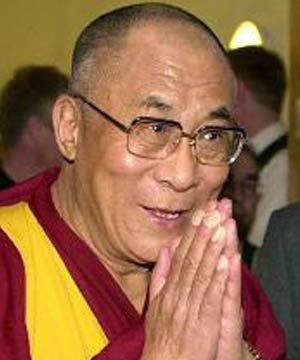
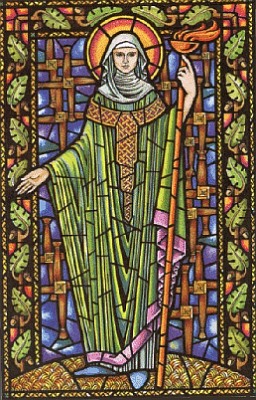
The 14th Dalai Lama is coming to Ireland next week and visiting our home county of Kildare.  Apparently he has a particular interest in Brigid a Roman Catholic saint of doubtful pedigree.  In preparation our children have learnt a particularly suspect song directed to Brigid – who if she was a real human is now dead and so – according to the ethos of the school – should not be sung to.  But you know we’ll put up with that.  Our children have been educated enough to know these things (not by the school though unfortunately) and we don’t want to make a fuss about relatively minor matters.  There are more serious issues in children’s lives than that kind of thing.

No one is really sure if she was a real person or just a christianised pagan deity

And sure, haven’t we been taught to be tolerant?  Isn’t that the message of the Dalai Lama?  What could be wrong with that?

Jesus said:  “I am the Way, the Truth and the Life.  No one comes to the Father except through Me.” John 14:6.

My 10 year old daughter quoted that to me recently when I asked her what she thought about the Dalai Lama.  You see she has a living relationship with Jesus and she has it, she knows, because He suffered a very cruel death so she could. 

If the Dalai Lama is right, the answer of God the Father to Jesus in the garden of Gethsemane to his question: “If this cup can be taken away from Me..” should have been: “It can”.  Because if the Dalai Lama is right there is another way to the Father, in fact more than one.  That makes the Father’s insistence on making His Son go to the cross for our sins the act of either a mad God or a bad one.

So when one of my children is asked to sing to Brigid and to the Dalai Lama I’m going to back him up in his own desire not to be made to go and write a letter to the principal of the school explaining why not.  

Tolerance of other religions is fine but I will not support them. 

The Christian gospel still has some absolutes.