Clay Vessels

What is man?  If we are to be disciples, one of the things we have to fundamentally understand is that we are creatures, i.e. we were made by Someone greater than ourselves. 

The thing molded will not say to the molder, “Why did you make me like this,” will it? 21 Or does not the potter have a right over the clay, to make from the same lump one vessel for honorable use and another for common use? (Romans 9:20, 21)

But we have this treasure in jars of clay, to show that the surpassing power belongs to God and not to us. (2 Cor. 4:7)

This is the word that came to Jeremiah from the Lord: “Go down to the potter’s house, and there I will give you my message.” So I went down to the potter’s house, and I saw him working at the wheel. But the pot he was shaping from the clay was marred in his hands; so the potter formed it into another pot, shaping it as seemed best to him.

Then the word of the Lord came to me. He said, “Can I not do with you, Israel, as this potter does?” declares the Lord. “Like clay in the hand of the potter, so are you in my hand, Israel.  (Jeremiah 18:1-6)

There is a risk of oversimplifying things but it is possible to see ourselves as vessels similar to the ones that were at the wedding feast of Cana (John 2) or like the vessels in the scriptures above.  Vessels are meant to contain something and, in this way of looking at things, our vessel contains a spirit soul mixture.  We were designed to hold the Holy Spirit and only He can properly fill us.  We are not talking about something small when we talk about the body being a vessel for a spirit.  In the dimensions of the spirit/soul, our bodies are almost inconceivably large and complex.  It is quite possible for many spirits to exist in a body as Mary Magdelene experienced (Luke 8:2) and the story of the demoniac with a legion of devils shows (Mark 5:1-20).

Through submission to His will, be filled and overflowing with the Spirit.  As He moves in you He will stir up a lot of dirt.  So don’t be surprised if in your most “holy” moments of communion with God some completely inappropriate and downright evil things appear.  Let them come to the light, confess them and cooperate with God by obedience in dealing with them.  Don’t dwell on your evil, look up and out, God is love and to love isn’t to be consumed with care about one’s own personal holiness.  Jesus has it sorted.

The Key to being a Disciple

If you want to be a disciple of Jesus you need to meditate long and hard on John 15.  One word is repeated throughout the first 17 verses: Abide (or remain).  To abide in God is hard if you value your freedom above anything else.  It requires complete submission to His will, a childlike trust.  If you really want to do His will you will know what it is (John 7:17) and be able to abide in it.

One of the central paradoxes of the Christian life is this:  Jesus died for all our sins, past, present and future so we can have eternal life freely without having to do anything other than allowing the Holy Spirit to apply that truth to our lives.  We receive that truth, believe, are born again and we are fit for heaven.  But if you want to be a disciple you need to realise that you have been bought with a price, you are not your own (1 Cor. 6:20). If you want to be a disciple you need to lay down your life and decide, here and now, not my will but Yours be done.  You give up your freedom for something better: to be a slave of God.

This may seem harsh but in reality God’s yoke is easy and His burden is light (Matthew 11:20).  It is the constant fighting against it that can be hard.

Here is an illustration from real life that I have found useful: We have two dogs which we take for walks.  These dogs love their freedom. We dare not let the biggest one in particular off the lead since he will then just make a dash for it and could easily get killed on the roads.  He won’t come back when you call him.  He values his freedom above obedience but one day that could cost him his life.  Because we love him and don’t want to lose him we keep him on a lead.  Part of his training involves being made to walk close to his master.  Sometimes we make it so he is constrained to walk between a wall and his master’s feet with no room to manoeuvre.  It seems harsh, he has no freedom, no choice but it is the best way for him to learn to walk at the pace of his master.

dog on lead

There is an interesting contrast between the two dogs.  The smaller one causes less trouble when she pulls on the lead than the bigger, stronger one does.  So she gets away with more.  But anyway, if we let her off the lead she will come back when you call her.

God works with us in similar ways.  If you are big and strong you may need more pressure and constraining than someone weaker.  Either way, the key to getting more freedom is to be more submissive to your Master’s will.

On Being a Disciple (cont.)

To say God inspired John’s gospel doesn’t do it justice.  God took over John, possessed him and spoke through him with pretty well no impediment.  Huge chunks of it are reported speech, the words Jesus spoke faithfully and accurately recorded in extraordinary detail.  In John’s gospel we are given insight into the inner workings of Jesus’ mind and heart.  His total submission to the Father comes through everywhere.

You might be thinking that surely we are not the same as Jesus, the Son of God, member of the Triune God.  And of course you would be right.  However that is not the same as saying we are not called to have the same approach and heart as Jesus has.  The wonderful beauty of this kind of relationship with God is that it is impossible without experiencing the same kind of love and intimacy with His Father that Jesus experienced.

To go the way of a disciple of Jesus you need to be romantic.  You need to be head over heels in love with God, fanatical, call it what you will.  It is something all the best movies have, the idea of self sacrifice because of love.

Don’t be afraid, little children, your Father in heaven loves you.  Let Him be intimate with you and show you the radical, adventurous things He would have you do to bless others.

On Being a Disciple

A disciple is, by definition, someone who follows and learns from a master with the aim of becoming like the master.  Christian disciples follow and learn from Jesus with the aim of becoming like Him.

If you want to be a disciple then the Gospels are paramount.  And there can be few more succinct and challenging passages about what it means to be like Jesus than in John 5:30.

At this point there is a good argument to be made for just throwing up your hands and forgetting all about this discipleship thing.  How on earth can anyone do nothing of themselves?  Thank God for the Cross because if this is the standard then none of us have a hope in …..

But with God nothing is impossible (Luke 1:37).

There are some keys to discipleship in this verse.  One of the main ones is that if you want to get your judgments right you had better not be seeking your own way over God’s.

Context is, of course, critical.  The overarching context is John’s gospel.  When it comes to the four gospels, one of these is not the same as the others.  John’s gospel stands out for its emphasis on the deity of Christ and its focus on the inner life and motivations of Jesus.  It is the most intimate of the gospels with a miraculous recording of the words of Jesus.  The impression you get reading it is that John is repeating verbatim what Jesus said and that it is the Holy Spirit that is inspiring him word by word.  In other words John is practicing what Jesus preached:  John is saying only what he hears from his Father.

Which brings me to the other more immediate context.  This passage starts with another “impossible” statement of what it means to be a disciple:

“Truly, truly, I say to you, the Son can do nothing of Himself, unless it is something He sees the Father doing; for whatever the Father does, these things the Son also does in like manner.”  (John 5:19, NASB).

So, perhaps in this lies the secret.  If you are born again (another great theme of John’s gospel) you become a child of God.  Like any child you will end up doing what you see your Father doing.

“Love God with all your heart, with all your soul and with all your strength. This is the first and greatest commandment.”

“When you pray, pray like this:  Our Father…..”

Being a disciple is not for the faint hearted.  It is for children.

Fellowship with the Saints

The words “fellowship” and “saints” are old-fashioned and rarely encountered in modern Evangelical/ Pentecostal circles.

JRR Tolkein’s first book in the Lord of the Rings trilogy is called “The Fellowship of the Ring”.  Fellowship in that context, and generally, speaks of a group of people united in a common purpose.  The purpose is greater than the individuals and calls for self-sacrifice and submission.

The word “saint” means sanctified one.  In the context of Scripture, Paul writes to the saints at various places as members of the local churches there.  Saints in the biblical context are those who have an ongoing, personal relationship with God in the context of the local church.

Put the two words “Fellowship” and “Saints” together and you have a group of people united in glorifying God through their lives together.

I can of myself do nothing

The Netflix series “The Crown” is in season 2 now.  I have got as far as the end of episode 6 of season 1.  I like it since in general it seems to be historically true though with the usual dramatic license taken here and there to emphasize or dramatize an aspect of the truth.

One of the things that is striking about it so far is the self-denial that the Queen has to go through.  She really cannot do what she wants to do.  What is peculiar about that is that she is Queen and so, in theory, can do pretty much anything she wants to do.  In practice she is bound by tradition and duty to a higher standard.   The Queen answers to God ultimately according to that tradition which in itself is based on the bible.  So the constraints on her are those imposed by God (Romans 13).

Jesus expressed the ultimate submission, from which monarchs and disciples derive there submission to God,  in John 5:30:

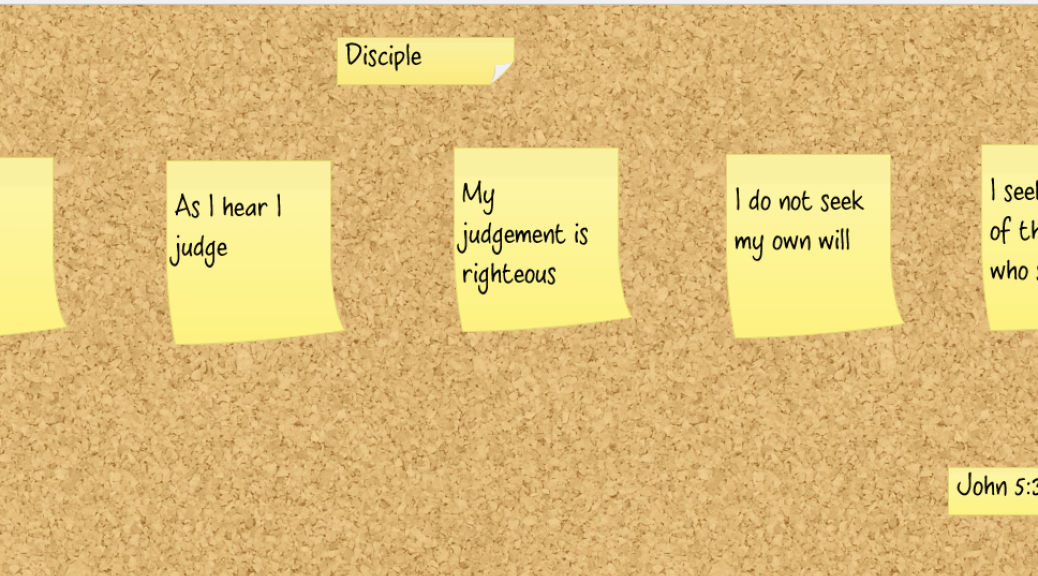
“I can of Myself do nothing.  As I hear I judge and My judgement is righteous because I do not seek My own will but the will of the One who sent Me.”

To have communion with God and to do His will is to be in self denial.  Jesus says elsewhere that unless we deny ourselves and take up the Cross daily we cannot be His disciples.

Do you want to be a disciple?

If so, will you submit to Him in love and happily give up the freedom to do what you want?

If you have been born again, this is, in fact, the only way forward.

Communion with God

Communion with God is intimacy with your creator.

The wonderful privilege of everyone who has been born again is the possibility of ongoing communion with the Creator of the universe.

As creatures we were made to be vessels carrying a treasure (2 Cor. 4:7).  That treasure is the Holy Spirit.  Intimacy with God is being what we were meant to be, filled with the Holy Spirit.

There is no more intimate picture than a vessel filled with a liquid.  The vessel itself knows nothing but containment of something greater than itself, something which it feels touching every inside surface.  Every so often the Owner comes and tips out the precious substance for someone else’s benefit and then tops it up again to overflowing.  Overflowing is the better state for a vessel.  Then it is not just containment and the inside surfaces that know the joy of intimacy but every part of the vessel, even those parts that are outward facing, feel the joy.

Jesus said that the first and greatest commandment was to love God with all our heart, soul, mind and strength.  You cannot love God in this way if you don’t have intimacy with Him.  You cannot love God in this way unless you are filled with the Holy Spirit.  You must be born again, yes, but you must also yield and let Him fill you on an ongoing basis.

Dedicate some time every day to intimacy with God your creator.  Hear what He is saying to you.  Do what He says. Repeat daily.

Pathetic Fallacy

Back when I was doing my Leaving Cert English course Shakespeare’s King Lear was on the curriculum.  I’m not sure was it my teacher at the time or a textbook but one of the phrases used was “pathetic fallacy”.  It referred to Shakespeare’s use of the weather in the play to reflect the action on the ground.  At the height of the worst tragedies that fell on King Lear the storms raged the worst:

“Blow, winds, and crack your cheeks! Rage! Blow!

You cataracts and hurricanoes, spout
Till you have drenched our teeples, drowned the cocks!
You sulphurour and thought-executing fires,

Vaunt-couriers to oak-cleaving thunderbolts,
Singe my white head! And thou, all-shaking thunder,
Strike flat the thick rotundity o’ the world!
Crack nature’s molds, all germens spill at once
That make ingrateful man!”

King Lear, Act 3, Scene 2 by William Shakespeare

So the now forgotten commentator called this kind of matching of the elements to the moral events on the ground “pathetic fallacy”.

The attitude that such connections are pathetic lies is now so ingrained into our thinking that anyone who even remotely suggests in our “enlightened” western humanist society that God might have something to do with the weather is likely to face the worst of scorn.   And, indeed, caution is always advised when attributing any specific elemental actions (e.g. fires, earthquakes, floods, droughts, etc.) directly to God’s judgments especially at macro levels like nations (notwithstanding the fact that these acts are all called “Acts of God” for insurance and other purposes).

However, the bible is quite clear that God is in control of the weather whatever we might be told by English teachers or otherwise.   Here is one example taken from Zechariah chapter 10 in the Old Testament:

“Ask the Lord for rain in the springtime;
    it is the Lord who sends the thunderstorms.
He gives showers of rain to all people,
    and plants of the field to everyone.”

Zechariah 10:1

I have a number of reasons for drawing attention to this current drought and asking the question:  “Is God judging Ireland?”

One of the reasons is that I woke up with a vivid dream this morning.  In it, I was in a train travelling through the hills along the coast.  It could have been from Greystones to Bray or somewhere similar.  On hills away from the coast fires were breaking out all over.  There was a solitary fire man fighting one of them.  I didn’t see any houses go up in flames just gorse and hedges.  But there were a lot of fires and not enough firemen.

To be fair, you wouldn’t have to be much of a prophet to predict that in this weather in this country.

We are all enjoying the fine weather.  Ireland is known for its rain during the summer or indeed at any time of the year and so any respite from rain is usually welcomed by the majority of the people.  However when it comes to judging nations the bible does have quite a lot to say.  Usually judgement comes in the form of an invading force but in Zechariah chapter 14 there is this verse:

 If any of the peoples of the earth do not go up to Jerusalem to worship the King, the Lord Almighty, they will have no rain.

Zechariah 14:17

The context in this case is (probably) the millennium rule of Christ on the earth which (probably) has yet to happen.  However the principle is the same:  When God holds back rain it is not a good thing.

Disciples, Saints and Overcomers

According to the bible, God’s eternal destiny for you is communion with Him and fellowship with the church.  Communion and fellowship starts from when you are born from above (John 3:8) and continues for eternity.  Evangelism, by contrast, just lasts for this life.  After God ushers in the new heaven and earth (Rev. 21) there is no more opportunity for people to transition from the kingdom of darkness to the kingdom of life.  This makes evangelism critically important and if you did nothing else but tell people the good news of Jesus’ death for our sins and resurrection, you will not have wasted your time on this earth.

However, the bible includes a lot about communion with God and fellowship with His people.  As examples, Jesus tells people about the narrow way in Matthew 7, Paul quotes a number of old testament scriptures on the subject of being God’s sons and daughters at the end of 2 Corinthians chapter 6 and John records Jesus’ words on abiding in John 15.  But there are many more examples, in fact, depending on how you read it, you could say the whole New Testament is mainly about these two things:  communion with God and fellowship with His church.

In fact I believe that when God inspired the Scriptures (particularly the New Testament) he inspired them with mainly one class of people in mind.  Jesus called these people “disciples”, Paul went on to describe them as “saints” and John wraps up the New Testament by calling them “overcomers”.   The three words are not synonyms but they are closely related and they also have a sense of progression in them.  Being a disciple/ saint/ overcomer is God’s ordained way of having communion with him and fellowship with the church.

According to the New Testament, if you want communion with God and fellowship with the church then you must be born again, be a follower of Jesus (a disciple), be made holy (a saint) and persevere to the end (an overcomer).

Evangelism, Communion and Fellowship

Jesus spelt out the way of connecting people to God when He told Nicodemus that “You must be born again”.  You can find an account of His conversation with Nicodemus if you read John’s gospel, chapter 3.

According to the bible, the aim of church should be to tell as many people as possible about the good news that God through Jesus Christ has reconciled the world to Himself (2 Corinthians 5:9).  Jesus is the only way to eternal life or heaven (see John 14:6).  Unless you are born again you cannot even see the kingdom of God, never mind enter it and live for ever (John 3:3).

So you must be born again (John 3:5).

There is a very good case for leaving it at that.  If us Christians all just spent our time bringing everyone we knew to the place where they were born again – or at least presented with that possibility – we would have spent our lives very profitably.  This approach to life is called evangelistic and some people who meet God are called to it almost exclusively and everyone who calls themselves a bible believing Christian is called to it to at least some extent.

However the bible has a lot more to say about what it means to be a follower of Jesus after that initial, critical, connection has been made.  If you have been born again God wants you to have two things that he talks a lot about in the bible: Communion with Him and fellowship with others who have been born again (i.e. with His Church).  The Scriptures spend a lot of time dealing with this.

Communion and fellowship are eternal (see, for example, John 17).  Once you are born again and transferred from the kingdom of darkness into the kingdom of life (Colossians 1:13), communion and fellowship is your eternal destiny.  It is where God wants you to be now and forever.

A Christian in a relationship