A way of looking at the descriptions in the book of Revelation

Some people say Revelation is purely symbolic.  Some people say it is literal. Personally I consider all of Revelation open to a literal interpretation, i.e. it was literally what events on earth looked like from the vantage point of heaven to a human transported there (i.e. John).

John is in eternity looking down at events on earth occurring in time. That being the case there is bound, even for this reason alone, to be considerable differences between what he saw of the same events in comparison to someone viewing from earth in time.  Add to that that he was also more than likely looking at the spiritual rather than the corporeal bodies of each participant and the imagery in Revelation is more easily understood (perhaps).

Here are some thoughts:

Revelation is the spiritual view of events on earth through the second heaven – c.f. Daniel 7.

Animals represent creatures, corporations with no relationship with God, humans represent creatures or corporations capable of a relationship with God.  Corporations in this sense are collectives of people with one spirit, e.g. nations, empires, companies, etc.

Does that help?

The consequences of communion

  or   

Paul’s observations on what happened when people didn’t discern the body of Christ during the breaking of bread or Lord’s supper or communion as it is sometimes known (1 Cor. 11:30) can be better understood if we look at the historical understanding of disease at the time and now.  Now we understand the concept of germs and contagious diseases but then such things were not understood at all.

However Paul was able to observe something happen and come to conclusions.  Communion meant sharing a common cup and bread (1 Cor. 10:16,17) then.  Nowadays we don’t normally do that, at least in large congregations.  The reason we don’t  is because we know that is how germs are spread.  But at a time when that was not understood, the connection between falling ill (or sometimes dying) and sharing a common cup would not have been so understood.  However Paul observed this happening in some churches.  And it would seem it was churches like Corinth who seemed most lax about how they observed the Lord’s supper that this happened in the most.

Now let’s take this argument one (admittedly controversial) stage further.  He says that believers in some cases were ill after communion because they did not observe the Lord’s body (1 Cor. 11:29).  In general believers will not be leading a promiscuous lifestyle.  Contagious diseases in particular are picked up by a promiscuous lifestyle.  So if the body is discerned and those who are outside the body in general are convicted enough by the self examination not to partake in the breaking of bread then that reduces the risk of the spread of contagious disease through sharing a common cup.

Of course there is not a one to one correlation between not having contagious disease and being a Christian – most everyone gets a cold at some time – but you can see how this might work out in practice even at a simply natural level.  Then if you take into account God’s divine intervention on behalf of His people …

Lessons in Maturity: Separating knowledge from the Knower

In 2011 I worked for a company of consultants.  One of the tasks I was given during that time was to come up with a way of handling knowledge.

Knowledge comes in two main forms: implicit and explicit.

Implicit knowledge is information or data or skills that people know without realising they do or, at least, without articulating it well.   Implicit knowledge can be very hard to document or explain to someone else. Explicit knowledge is the opposite, it is knowledge that is easily documented and understood in text or diagrams.  In the past and in some places today, civilisations and organisations dealt with the problem of passing on implicit knowledge by using an apprentice and master approach. This approach has gone out of favour in the West generally.

In my research I came across this paper. Its a typical Ph.D. paper with loads of big words, months of research and lots of references. But basically it says you can’t separate knowledge out from the knower and make it useful for people who are in the senior consultant category (mature if you like). The senior consultant will always need to talk to the knowledge originator to get the things (help, implicit knowledge, advice, experience, contacts, etc.) that only a conversation or interaction with the person will provide. Explicit, extracted knowledge only has limited use really only for those who are inexperienced or new to a company.

Likewise reading the Bible on its own without being a disciple of its Author is of limited use and can be quite frustrating.

Lessons in Maturity: Lactose intolerance

Here is an offbeat observation of real life imitating Scripture at a physical level: Lactose intolerance is standard as people mature unless it is removed by adverse conditions.

In Northern Europe over many generations the gene that normally activates lactose intolerance was removed by natural selection due to the dependence on cow’s milk in the colder climates. Hence the fact that all major races except Caucasians (and some East Africans) are lactose intolerant after breastfeeding age.

So it is natural to mature beyond milk at least in the physical.

Is the western dependence on spiritual milk among Christians with years of a Christian walk likewise evolved and unnatural?

Pruning Fruit Trees

We only have two fruit trees in our garden.  We have had both of them for going on four years now.  Neither I nor my wife would consider ourselves horticultural experts.  Indeed about the only things I know about looking after fruit trees I learnt from reading passages in the bible.  Particularly John 15.

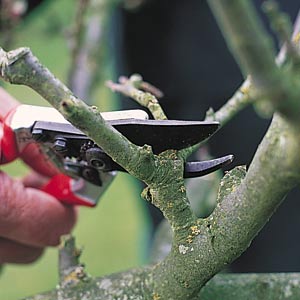
So inspired by John 15 I took my secateurs (just like in the picture) and set to.

I first went looking for fruit.  One of our trees is a pear tree and it has never borne us any fruit.  I don’t blame it really, it was supposed to be pruned and trained along the wall.  Nevertheless this year it is showing some signs of fruit on one branch.  Maybe I was wrong but I didn’t have the heart to prune it much since it seems quite weak.  I thought it might find the shock of severe pruning too much and die on me.  But I did get rid of some new growth.

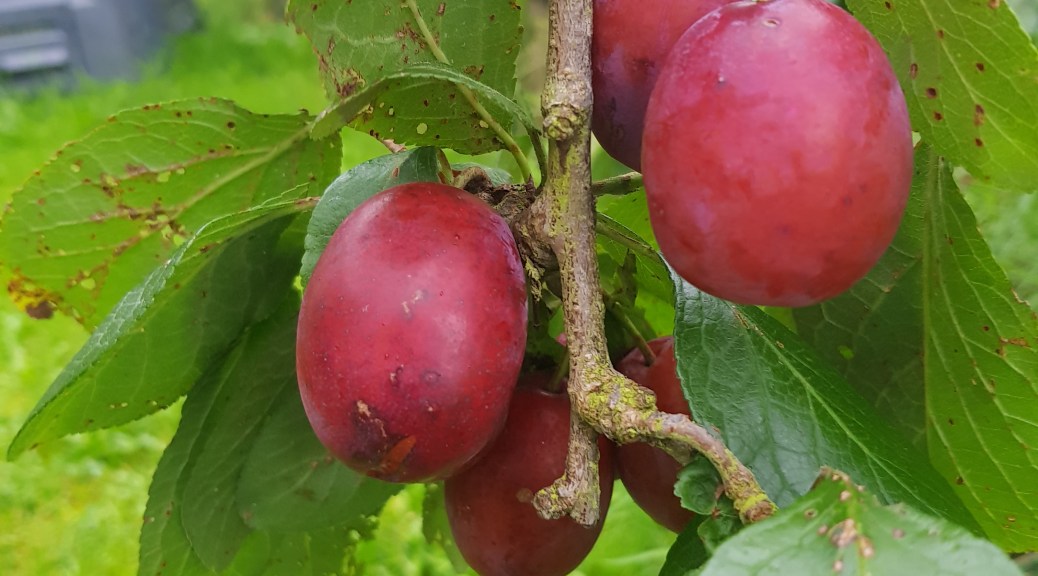
The other tree is some kind of edible cherry – a damson but yellow.  It produced its first small crop a couple of years ago and last year it produced a much bigger crop.  This year it is looking promising, plenty of signs of fruit on many of the branches.  So I thought – strong tree – fruit on many branches – I’ll remove the branches that are not bearing fruit and prune the ones that are a la John 15.

The fruit is quite green at this stage and easy to miss among the green leaves so I was careful to make sure there was no fruit before I removed a branch.  I noticed that if a bough was not fruitful (c.f. Genesis 49:22) then neither were any of the branches on it.  If a bough was fruitful then several – though not all – of the branches on it had fruit.  The tree was not large and neither were the boughs so I removed one particularly dead looking one and all its branches went with it – not one fruit on any of them.

I also noticed a branch that had had fruit but the fruit had, even at this early stage, been eaten or removed by birds or something.  I reluctantly removed that branch too.  At this stage it is too late in the season to presume it will bear fruit again.

When it came to pruning the fruitful branches I was quite thorough.  I didn’t want the goodness of the tree to be wasted producing only leaves so I removed new unfruitful growths and twigs.

I’ve been long enough around the Christian scene at this stage to have seen in churches the things I saw today pruning the fruit trees.  If a stream or denomination is unfruitful all that it grows is ultimately unfruitful and will end up being removed from the life giving tree.  It may lie dead on the ground for some time but eventually it is gathered by men into (building) piles and burnt.  So often only the shell remains.

I’ve also seen churches that were once fruitful but now no longer are.  They can show you the remnants of the fruit but the destroyer was let in and they also are unfruitful.

The work of the vinedresser can be sudden and traumatic.  At the right time, when the fruit is showing itself, then what is happening in the tree can be seen and it is time for the Father to act.  It isn’t easy when He does.

I believe that this is such a time in Ireland.

John’s Wonderful Gospel

“In the beginning was the Word….”

So starts the sublimest of the Scriptures.  For me there is no greater writing than the Apostle John’s in all of the Scriptures.  In this Gospel he explains the deepest of truths in the simplest of terms.

The first 12 chapters of John’s gospel consists of a series of vignettes and cameo appearances.  Every chapter contains one or two.  There is the calling of the disciples, John the Baptist’s declaration, the wedding feast at Cana, Nicodemus coming at night to see Jesus,  the woman at the well, the centurion’s servant, the invalid at Bethesda, the feeding of the five thousand, the great day of the feast, the woman caught in adultery, the man born blind, the parable of the Good Shepherd, Lazarus rising from the dead and his two sisters different reactions.   Then there is the wonderful teaching passages of chapters 13 -16, washing the disciple’s feet, behold I go to prepare a place for you, the True Vine and  the Comforter.  The prayer of chapter 17.  The crucifixion, death, burial and resurrection of chapters 18 – 21.

In all the Gospel of John it is Jesus that we see in ways He cannot be seen anywhere else in Scripture.  There is an intimacy and level of detail about this Gospel that is not found anywhere else.  Jesus’ response to people and events is brought out in all sorts of ways, wonderfully expressed.  For example, Jesus supplied abundance at the wedding feast of Cana, taught Nicodemus spiritual truths in depth, gently elicited the truth from the woman at the well, explained a blindness to the disciples,  wept at the difficulties death had brought to people’s lives.

Jesus is declared to be wonderful things in this gospel:  the Word of God, the Bread of Life, the Resurrection, the Way, the Truth and the Life.

This gospel is wonderful because of its main character purely and wonderfully expressed in its pages – Jesus.

THE Royal Wedding

Royal weddings like today’s between Kate Middleton and the second in line to the throne of England, Prince William, come closer than any other event to the Royal Wedding that I am looking forward to.  Kate comes from a family with no hope of becoming royalty because of their background, yet she is chosen by a future king to enjoy all the privileges of the kingdom.  As the bishop who married them said:  “O GOD, who … hast consecrated the state of matrimony to such an excellent mystery, that in it is signified and represented the spiritual marriage and unity betwixt Christ and his Church..” which is taken straight from Ephesians 5:32.

That is going to be a great day and today’s royal wedding gives some idea of the glory, pageantry and celebration of that day.

I wonder how many people though stop to really analyse why a royal wedding with a so-called “fairy tale” element to it should move their hearts so much that even the most cynical observer cannot but fail to have hope awakened in them? That countries should declare a national holiday with celebrations in the streets?  That billions of people should watch and enjoy it – not really understanding why?  Is it rational to have so much joy given the fate of William’s parent’s similar marriage?

But really this is not about Kate and William or their parents.

The only answer to why a royal wedding has such impact really is the fact that God has given to every man some measure of faith (Romans 12:3) or as the Preacher puts it, eternity in their hearts (Ecclesiastes 3:11).  God has indeed ordained marriage, days like today prove that to those with eyes to see.  But even those who can’t see that specifically know something special is happening.

It is more than just a good English pomp and ceremony show that causes them to weep.  Its the possibility that they too could be like Kate.  And that is no fairy tale.

“For God so loved the world that He gave His only begotten Son that whoever believes in Him…..” (John 3:16)

The difference between tolerance and support

Our children go to a Church of Ireland based school.  Most of the schools in Ireland are run on religious lines and the ethos of the school very much depends on the religion that is sponsoring it.  Unfortunately there are very few if any evangelical run schools in Ireland and none near us.  So schools run by Protestant denominations are probably the closest in ethos to what we would believe.  Of course that doesn’t stop them being taught about other religions even to the point of making clay buddhas in school.  In general I have no issue with this, its not as if they are asking my children to worship the buddha or anything. 

Well, usually not. 

Being the 14th means he will probably die like his predecessors

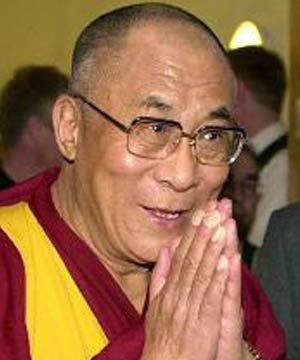
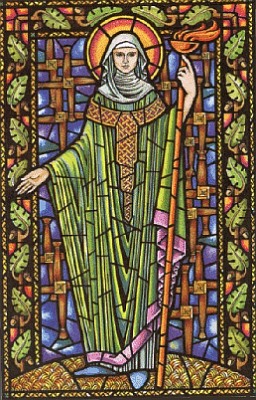
The 14th Dalai Lama is coming to Ireland next week and visiting our home county of Kildare.  Apparently he has a particular interest in Brigid a Roman Catholic saint of doubtful pedigree.  In preparation our children have learnt a particularly suspect song directed to Brigid – who if she was a real human is now dead and so – according to the ethos of the school – should not be sung to.  But you know we’ll put up with that.  Our children have been educated enough to know these things (not by the school though unfortunately) and we don’t want to make a fuss about relatively minor matters.  There are more serious issues in children’s lives than that kind of thing.

No one is really sure if she was a real person or just a christianised pagan deity

And sure, haven’t we been taught to be tolerant?  Isn’t that the message of the Dalai Lama?  What could be wrong with that?

Jesus said:  “I am the Way, the Truth and the Life.  No one comes to the Father except through Me.” John 14:6.

My 10 year old daughter quoted that to me recently when I asked her what she thought about the Dalai Lama.  You see she has a living relationship with Jesus and she has it, she knows, because He suffered a very cruel death so she could. 

If the Dalai Lama is right, the answer of God the Father to Jesus in the garden of Gethsemane to his question: “If this cup can be taken away from Me..” should have been: “It can”.  Because if the Dalai Lama is right there is another way to the Father, in fact more than one.  That makes the Father’s insistence on making His Son go to the cross for our sins the act of either a mad God or a bad one.

So when one of my children is asked to sing to Brigid and to the Dalai Lama I’m going to back him up in his own desire not to be made to go and write a letter to the principal of the school explaining why not.  

Tolerance of other religions is fine but I will not support them. 

The Christian gospel still has some absolutes.

Heaven

Sometimes classical music describes heaven better than words. Faure’s Pavane, Beethoven’s 5th Piano Concerto, Mozart’s clarinet concerto, the list goes on and on. There is something in the eternal depth of the relationships that we will experience, the striking and fantastic adventures, the discovery of new worlds and aspects of creation – all these and many other eternal themes are better described by music than anything else.

I’ve listened long to the news yesterday and today, saddened by the pain and suffering and fear inflicted on so many in Japan. I’ve come to God about it.

Of course His judgements are past finding out (Romans 11:33). We can speculate all we like about the Apocalypse now or God’s judgements on a godless people but in the end we are only seeing the edges of His ways on the earth. Oh, Lord, in wrath remember mercy!

But Heaven, ah, that’s the place. We are probably all going to die (or go to sleep as the bible puts it for believers).  Maybe it won’t be in some catastrophe like in Japan or maybe it will.  Are we afraid of nuclear disastors?  Nations in anguish and perplexity at the roaring and tossing of the sea… (Luke 21:25).

It is always a good thing to remember what is coming afterwards.

If you know the good news you know why you don’t need to be afraid and why you are going to heaven.  As a check on your salvation though ask yourself a question:  As a created, reasoning entity – could you be trusted in heaven?  This is another way of asking whether you are really going on with God.  Without holiness none of us will see the Lord (Hebrews 12:14).

As we see these things happening we know that the kingdom of God is near (Luke 21:31).  Let’s be ready and encourage one another to be a living active part of it.

Format the same, experience different

I believe it is a sign that the church is being led by the Holy Spirit that I can be in worship one Sunday and be in a march across the county and the next Sunday in a love-in holding hands with angels (ok my imagination, indulge me) and knowing intimacy with the Holy Spirit as a dove (Psalm 68:13).  Yet nothing in the format of the meeting changed – same band, similar songs, mostly same congregation.  God having His way with His people.

I believe God showed me the way He sees things in a measure.  Whereas we hear the sounds and see the sights, He sees the relationships between the people.  No matter how professional the production, if  there is back biting and gossip, discord and anger God sees that.  What is pleasing to Him is the love being shared throughout the congregation.

A Christian in a relationship