All posts by faithfulwon

Communication

Grasping God’s Word Assignment 10-2

Scripture is not the only means of knowing what God is saying

From a Christian perspective, meaning and interpretation are ultimately grounded in all God’s communicative action in creation, in the Scriptures, and pre-eminently in Christ.  For those who know God, just having the bible on its own is not enough.  We also desire to know Him intimately in the Spirit.

The great thing about having the Scriptures is that, used correctly, they are not as subjective as our personal experience of Christ can be.  Reading and understanding what the Scriptures say about God is a great way of checking our personal experience, of validating the genuineness of our faith.

If you then add to that a right understanding of, and connection with, His creation you have a threefold strand which cannot easily be broken (Eccles. 4:12).  The ultimate and best expression of God’s creation is in mankind.  In particular the bonds and modes of behaviour that we call good and which to some extent are in all mankind, communicate to us what God is like.  For example the right relationship of a parent with a child and husband with wife and vice versa help us to understand what God is like and how He loves us.

The ultimate right connection for any believer with God’s creation is to be part of a community with others who know Him in the Spirit and where His Word is preached by godly men and women, i.e. His Church.  In the Church is combined the best of God’s creation, godly exposition and presentation of the Scriptures and the image of Christ who is its Head and of whom the Church is His Body (see also my post on the Three Pillars).

Local expressions on this earth of His Church can be quite a mixture of the earthly and the divine and don’t always live up to this exalted view of the Church.  But, hey, what do you expect on this earth.  In Heaven She will be revealed in a different light.

Duval & Hays have this very helpful thing to say about the importance of communication when reading the Scripture:

“The issue of communication … lies at the heart of one’s decision about how to interpret a text. If you, the reader, see the text as a communication between the author and yourself, then you should search for the meaning that the author intended. If, however, you as the reader do not care to communicate with the author, then you are free to follow reader response and interpret the text without asking what the author meant. In some cases, however, there may be negative consequences for such a reading.”

Word Study – “Sick”

Grasping God’s Word – Assignment 9-5

1Is anyone among you in trouble? Let them pray. Is anyone happy? Let them sing songs of praise. 14 Is anyone among you ill? Let them call the elders of the church to pray over them and anoint them with oil in the name of the Lord. 15 And the prayer offered in faith will make the sick person well; the Lord will raise them up. If they have sinned, they will be forgiven. 16 Therefore confess your sins to each other and pray for each other so that you may be healed. 

James 5:13-16a

The Greek word for sick – ασθενει – in this context is transliterated: Astheneo

Strong’s number: 770

It is used 33 times in the NT:

  • Sick (19 times): Matthew 10:8, 25:36, 39; Mark 6:56; Luke 4:40; John 4:46, 5:3, 7, 11:1-3, 6; Acts 9:37, 19:12, 20:35; Phil. 2:26-27; 2 Timothy 4:20; James 5:14
  • Weak (14 times): Romans 4:19, 8:3, 14:1-2; 1 Cor. 8:11-12; 2 Cor. 11:21, 29, 12:10, 13:3-4,9;

From the contexts in other passages it would appear that this word could as easily be translated “weak” as “sick”.  In English these two words are quite related but our understanding of the microbes that cause sickness make us more inclined to separate the meanings than would have been the case for people in James’ time.  If we use “weak” instead of “sick” in James 5:14 we have:

“Is anyone among you weak? Then he must call for the elders of the church and they are to pray over him, anointing him with oil in the name of the Lord;”

When we take the overall context of James 5:13 -16 we can see there is a connection between being weak, or sick, and sin.  The effect of the elders anointing is not just to make the person well physically but also spiritually – his sins will be forgiven.  In verse 16 the key to healing is that you confess your sins to each other and pray for each other.

In verse 15 the word translated “sick” is actually a very different word (κάμνοντα) which is only used one other time, in Hebrews 12:3, and there it is translated “weary”.  So if you feel weary confess your sins to each other and pray for each other and you will be healed.

Nowadays we are inclined to view disease and sickness differently from James.  For us there is only a tenuous connection, if any, between our personal actions and sickness.  Sickness is caused often by viruses or bacteria which seem separated from our moral actions.  As a Christian in the 21st Century the connection between sin and sickness is less personal, more related to the general fallen condition of the world than anything that we personally may have done.  But if you think in terms of sickness being weakness and put yourself in the context of a 1st Century Christian who knows nothing about viruses and bacteria then you might see the connection between personal sin and weakness or sickness more easily.  This also explains Paul’s warning about taking communion in an unworthy fashion (see Thoughts on Communion: Healing and The consequences of communion).

Things can come around though.  The bible’s wisdom does not seem so archaic in this regard if you are into holistic medicine.  Lifestyle and a tendency to sickness go together.  If your lifestyle is one of abusing the body through excessive alcohol or smoking or immorality then it is easy to see how those sins can affect your health also.  Other sins such as worry and anger also have physical effects causing illness or weakness or both.

In this passage though the emphasis is not on the sin causing the illness.  The Lord is gracious and he heals first and, then, forgives your sins also.  He doesn’t place the emphasis on the sin but rather on the healing of the sickness or weakness.

Which is just like Him, isn’t it?

Living on the edge of heaven

I have a dear friend and I’ve benefited from his wisdom, prayers and friendship for nearly 35 years now.  He suffers from a life threatening condition that could send him home at any time – he has already lived well beyond the expected life span of people with it.

I called over to him  yesterday.  We have this arrangement where I give him a call and if he is there and well enough (did I mention that the condition leaves him constantly tired?) I pop in for a chat.  Or rather I come to spend time in the presence of someone living on the edge of heaven.

It is remarkable how much blessing can come from being with someone like my friend in such a short time.  He seems to be always hearing from God.  Even though my last visit hadn’t been for over 9 months, and he didn’t know I was coming until a few minutes before I arrived, God had been speaking things to him the day before that were what I needed to hear.  During our conversation he also spoke other things that encouraged me.  And of course he listened more than he spoke.

Some day, any day now, he will walk from the edge of heaven straight into the middle of it and there will be no gap between the two.  And in one sense not much will have changed, he will just  be that little bit closer to the One he loves than he is now.

Word Study – Trials

Grasping God’s Word – Assignment 9-4

2              Consider it all joy, my brethren, when you encounter various trials,

3              knowing that the testing of your faith produces endurance.

4              And let endurance have its perfect result, so that you may be perfect and complete, lacking in nothing.

(James 1:2-4 (NAS), compare Romans 5:3-5)

The Greek word for trials in this context is πειρασμοις transliterated: Peirasmos

Strong’s number: 3986

It is used 21 times in the New Testament:

  • Temptation (12 times): Matthew 6:13, 26:41; Mark 14:38; Luke 4:13, 8:13, 11:4, 22:40, 22:46; 1 Cor. 10:13 (twice); 1 Tim. 6:9; 2 Peter 2:9.
  • Trials (4 times): Luke 22:28; Acts 20:19; James 1:2; 1 Peter 1:6.
  • Trial (3 times): Gal. 4:14; Hebrews 3:8; James 1:12.
  • Testing (twice): 1 Peter 4:12; Rev. 3:10.

From the contexts in other passages it would appear that this word is definitely more closely translated “temptation” than “trials”.  If we use temptation instead of trials in James 1:2 we have:

“Consider it all joy, my brethren, when you encounter various temptations”

We know that we are to pray that we do not enter temptation (Matt. 26:41) and we are to ask our heavenly Father not to lead us into temptation (the Lord’s prayer – Matt. 6:13).  However if temptation still comes then we should consider it a joy to encounter it, knowing that our Father has not allowed us to be tempted above what we are able for (1 Cor. 10:13).  We also know that it will produce endurance and a perfect result if we continue to be faithful to God through the temptation (James 1:2-4, Romans 5:3-5).

The nature of temptation is, of course, to be very enticing, seductive, tempting even.  What tempts me would not tempt someone else and what tempts someone else would not tempt me.  But whatever it is that tempts you, there is great reward in staying faithful through the period of temptation, of not giving into it.  Sometimes I feel ashamed at what tempts me, especially in the light of God’s mercies to me, the many blessings I enjoy because I do not yield and the disastrous consequences for those closest to me if I did.  Probably everyone is tempted by something that could, if yielded to, be very destructive – probably one of the seven deadly sins as they are called: wrath, greed, sloth, pride, lust, envy, and gluttony.

There are other temptations that are more subtle and rather than destroy our lives all at once, they wear them down slowly when yielded to.  These include any temptation to not put the Kingdom of God and His righteousness first (Matt. 6:33).  For example we can be tempted to think that spending dedicated time with God in private one to one relationship is less important than doing something else, e.g. spending time with family, work or just watching TV. Or we can be tempted to put other family activities before family worship, bible study and prayer.  This kind of temptation can be hard to consistently resist.

However the principle in all these cases is the same:

  • Resist temptation,
  • endure in resisting it (some temptations go on all your life)
  • look forward to the results of resisting temptation:
    • proven character,
    • the love of God poured out in your heart (Romans 5:5).

As the Lord said to Abraham: “I am your exceeding great reward” (Gen. 15:1).  Being close to Jesus is the greatest reward for staying faithful under (what can feel like) overwhelming, very attractive temptation.

Is a constant and closer relationship with Jesus the “perfect result” of enduring under trials that James is referring to?

Word Study OT – Meditate

Word Study – The word translated “Meditate” in Josh 1:8

Grasping God’s Word Assignment 9-3

  1. Strong’s number: 1897.
  2. The Hebrew Word transliterated “Hagah” is used 24 times in the OT.
  3. The New American Standard (NAS) translates it as:
    • declare (1 time): Psalm 35:28
    • devise (2 times):  Psalm 38:12,  Proverbs 24:2
    • devising (1 time): Psalm 2:1
    • growls (1 time): Isaiah 31:4
    • make a sound (1 time): Psalm 115:7
    • meditate (5 times): Joshua 1:8, Psalm 63:6, Psalm 77:12, Psalm 143:5, Isaiah 33:18
    • meditates (1 time): Psalm 1:2
    • moan (3 times): Isaiah 16:7,  Isaiah 38:14, Jeremiah 48:31
    • moan sadly (1 time): Isaiah 59:11
    • mutter (2 times): Job 27:4, Isaiah 8:19
    • mutters (1 time): Isaiah 59:3
    • ponders (1 time): Proverbs 15:28
    • utter (2 times): Psalm 71:24, Proverbs 8:7
    • uttering (1 time): Isaiah 59:13
    • utters (1 time): Psalm 37:30
  4. Context – one instance in Joshua but the 23 others are confined to the wisdom books – mainly Psalms – and the prophets – mainly Isaiah.  Used about people in connection with God and good plans, people in connection with evil and evil plans, a lion over its prey.  Doves can do it and idols cannot.
  5. Semantic range of the Hebrew word transliterated hagah: I think this word is used to describe any deep connection between a thinking being (including animals) and the object upon which the word is used.  It sometimes includes considerable emotion (moan).  It is used in both a positive and negative sense – people can “hagah” and use it to work evil (3 times) or good or to be taken up with evil or good.  It also carries expression with it in 14 instances out of the 24 – declare, growls, make a sound, moan (sadly), mutter(s), utter(s)(ing).  The word “Meditate” doesn’t capture the expressive nuances of the Hebrew word “Hagah”.
  6. In Joshua 1:8 I prefer the words “deeply connect” to “meditate”:

“This book of the law shall not depart from your mouth, but you shall deeply connect with it day and night, so that you may be careful to do according to all that is written in it; for then you will make your way prosperous, and then you will have success.”

Note also the connection with speaking it out in the earlier part of the verse.  This suggests another way of saying “hagah” in this context, i.e. “allow it to well up and out”:

“This book of the law shall not depart from your mouth, but you shall allow it to well up and out of you day and night, so that you may be careful to do according to all that is written in it; for then you will make your way prosperous, and then you will have success.”

Maybe we can put both of the meanings together (with some danger of overcooking the word):

“This book of the law shall not depart from your mouth, but you shall deeply connect with it and allow it to well up and out of you day and night, so that you may be careful to do according to all that is written in it; for then you will make your way prosperous, and then you will have success.”

Not just meditation but expression arising from it as well.

Word Study – “Worry”

Based on Grasping God’s Word Assignment 9-2

What is the Greek word μεριμναο translated “worry” in Matthew 6:25?

Strong’s Number: 3309

Greek transliterated word for 3309: merimnao

Used in the NT 19 times.

New American Standard (NAS) Word Usage – Total: 19

(Taken from Bible Study Tools website, 2013).  The NAS translates the Greek word μεριμναο transliterated merimnao into the following English words:

anxious (1 time) in Philippians 4:6

care (1 time) in Matt. 6:34

concerned (5 times) in 1 Cor. 7:32 – 34 and Phil. 2:20

have…care (1 time) in 1 Cor. 12:25

worried (4 times) in Matt. 6:25, 27, 28 and Luke 10:41

worry (6 times) in Matt. 6:31, 34, 10:19; Luke 12:11, 22, 26

worrying (1 time) in Luke 12:25

The things we are told not to worry about

Matthew 6:25 – life, what we eat, drink or put on.

Matthew 6:27 – how long we live

Matthew 6:28 – clothing

Matthew 6:31 – food, drink, clothing

Matthew 6:34 – tomorrow

Luke 12:22 – life/ eating, body/clothing

Luke 12:25 – how long we live

Luke 12:26 – other matters!

What is the context in Matthew 10:19 and Luke 12:11?

Persecution, being in front of a court to defend yourself or your faith.

Is this a different kind of worry than that prohibited in Matthew 6:25?

The worry in Matt. 6:25 is about basic needs – this worry distracts us from the Lord.  The worry in Matt. 10:19 and Luke 12:11 is directed towards the Lord, about saying the wrong thing that may get us into trouble or might not glorify Him. However both are similar in that they show a lack of trust in God to provide.

What stands in contrast to Martha’s worry (Luke 10:41)?

Mary’s listening to the Lord.

How does this contrast help to define Martha’s worry?

Martha’s worry then becomes a lack of listening to God, being distracted from what really matters by constant activity.

Diego_Velázquez_Christ_in_the_House_of_Martha_and_Mary

In 1 Cor. 7 Paul uses the word 4 times.  Describe the context of this usage.

This time the word is again used in the context of being distracted from the Lord, this time by a spouse.

What do the contexts of 1 Corinthians 12:25 and Philippians 2:20 have in common?

They use the word in a different sense from the other verses, i.e. in the sense of care or concern for another person rather than worry about ourselves.

What kind of worry is Paul describing in Philippians 4:6?

All kinds of worry.

How do you know?

It says “Be anxious for nothing.”

The semantic range (various meanings) of the Greek word μεριμναο transliterated merimnao

Worrying (about life, (food, drink, clothing))

Being distracted (from the Lord)

Caring/ concerned (for someone else)

Being anxious or of an anxious mind.

Conclusion

Matthew 6:25 is about worrying about life, being of an anxious mind, being distracted from and not trusting the One that really matters – the Lord.  A good translation of the word for me in Matthew 6:25 would be “distracted”:

“For this reason I say to you, do not be distracted (from your devotion to God) by your life, as to what you will eat or what you will drink; nor for your body, as to what you will put on. Is not life more than food, and the body more than clothing?”

Dream – Lessons in Creativity from the Creator

Knock, knock, knock!  I had heard that sharp sound before in middle of the night, and it had woken me up before, on at least two occasions.  The last two times I initially thought it was someone knocking on the door downstairs but then realised it had just been a dream, turned over and went back to sleep.  But a bit like the young Samuel in the bible, this third time I realised that this was actually God trying to get my attention.

“Here I am!  I stand at the door and knock.  If anyone hears my voice and opens the door, I will come in and eat with him and he with me.” (Rev. 3:20).

So I went to open the door and there Jesus was, all white and shining and making the inside of my head house look positively disgraceful.  I stood awkwardly at the door, saying that the place wasn’t tidy and, actually, it was quite dirty in places and I didn’t think it was ready for him to come in.

1078-reclaimed-wood-dining-table-1

But he countered by saying that he was friends with sinners and quite used to that kind of condition and could he come in anyway?

He came in and sat down on the other side of the rough wooden table that seemed to be the main piece of furniture in my head room.  It was no great shakes, in fact all the artefacts that I had in the room looked rough and unfinished.

I had “stumbled upon” a site on creativity before I went to bed.  In it Scott Berkun makes the profound observation that “an idea is a combination of other ideas”.

Jesus sat at the table and I talked to him about that.  He said to make him a meal, it seemed that he had a cake in mind in particular.  I went to my cupboards and started looking for ingredients.  I was quite happy because I seemed to have some really good ingredients in the cupboards.

And then the dream stopped or I woke up or something.

By “God-incidence” my daughter was making a cake the next morning.

Now a cake is not an intuitive thing.  Mixing a combination of raw eggs, sugar, flour and butter together in a bowl (in the right order) and then putting it into an oven for a certain time at the right temperature is not something that is easy to think up.  It is hard to imagine that those ingredients put together would make something that, in combination, is so different from its constituent parts.

But of course that is what God does all the time.  He is the only original thinker.  He came up with the basic building blocks and put them together in different combinations so that we would get the idea.  A soft metal (sodium) combined in the right way with a poisonous gas (chloride) give us a flavour enhancer and preserver (common table salt).  Two gases combined together in the right way give us water.  And so it goes on.  God has about 90 ingredients that he combines in the most creative ways imaginable.  His favourite ingredient is carbon and his favourite combination is water.   Its another study altogether to look into why that might be so.

So now I’m going to bring out my ingredients and ask God for a recipe that pleases him.

The Practice of Slavery in New Testament Times

“Half the population of Rome, and a large proportion of the Empire, were slaves. Christians did not oppose slavery but taught slaves to work well for their masters, believing or unbelieving. Slavery eventually became eradicated by masters and slaves becoming brothers in Christ. The Roman army often took the brightest and best young men and women as slaves.” (Halley’s Bible Handbook Page 616)

“The punishment for runaway slaves could be death. Slaves were not generally ill-treated but they were considered the property of their masters. They could be seized and sent back by anyone if they were trying to escape.” (John Drane, 1998)

“As many as one third of those living in Mediterranean cities may have been slaves, with others having slave origins. In Rome and Italy the figures were higher, perhaps as many as 80 – 90% of the population. By the first century the main supply came from children born to slaves. Slavery was not thought of as immoral or as necessarily degrading. A slave was simply the bottom rank of the economic ladder, doing the jobs equivalent to those which, typically in the 19th and 20th centuries were undertaken by immigrant labour.” (Bowker, The Complete Bible Handbook, 1998, Page 440)

When I think of slaves I think of the worst excesses of exploitation of labour such as took place on Roman galleys or in the gladiatorial arenas. However the reality for most slaves was quite different. Slaves in the Roman Empire were often treated well, especially in the case of those whose masters were Christians. In our case we are redeemed and slaves of Christ – a wonderful master so we don’t have to have negative connotations when Paul says that we should offer ourselves as slaves to righteousness in Romans 6. As Bowker says: “The gospel brought freedom from one slavery, but human beings could only realize their full potential as God’s creatures in the relation of absolute dependence on God, which the image of slavery so powerfully expressed.” (ibid. page 441)

“…slaves are directly addressed in Paul’s letters as members of the churches written to. Paul clearly regarded them as full members of these churches.” (ibid. page 441)

Hope for the intelligent and the danger of hypocrisy

I have been an amateur biblical scholar for many years now.  I have read lots, attended lectures and numerous conferences and bible studies, read the bible through every year at least once, transcribed the New Testament, learnt NT Greek and read extensive church (& secular) history over the 30 years since I became a Christian.  However all of this has been done in an informal manner and I have only once done a formal bible college course module.

I respect anyone that has spent all their working lives studying the Scriptures.  I don’t presume to know as much as them.  I do know what it is like to study something in depth.  I am an expert on mobile telephony and several other related fields due to the 30 years or more I have spent studying those subjects full time throughout my working life to this date.  There is no substitute for time and intelligence when studying something.

So why was Jesus so hard on the learned and those who had spent their whole lives studying the Scriptures in His day?  There seems to be two reasons:

  1. “Woe to you Scribes and Pharisees, hypocrites!” Matthew 23, etc.  They said but didn’t do.
  2. “You search the Scriptures because you think in them you have eternal life.  And it is these that bear witness of Me and you are unwilling to come to Me that you may have life.” John 5:39 NASB.  They did not study in the context of knowing and loving Jesus in the Spirit and coming to Him with their studies.

There probably would not be much hope for the learned and those who spend their lives studying the Scriptures in the Scriptures if it wasn’t for Nicodemus (John 3) and, even more significantly, Paul.    Paul in particular redeems all those who have intelligence and an encyclopedic knowledge of all things Scriptural.  But it is of course very significant that until he met the Holy Spirit in a personal, traumatic way (Acts 8) he was actually working against the God he professed to be working for.  Afterwards he was not disobedient to the heavenly vision continuously proving his lack of hypocrisy by his actions.

Those who have the time, inclination and propensity for studying the Scripture full time are few in this world.  For these people the danger is that the Scripture becomes a sort of god in it’s own right of which John 5:39 rightly warns us.  There seem to be a lot of churches around (evangelical ones as well) where there is a lot of emphasis on the Scripture but very little evidence of Jesus manifested in their lives.  I would not be alone in that assertion.  If anyone starts making a big fuss about what translation to use, for instance, I’d like to see their lives first.  There is a danger that people who spend most of their time studying these things may find it more difficult to find time to go visiting widows and orphans, the sick in hospital or prisoners.  I’m speaking as much to myself as anyone else in this.

Cursing while praying

The Imprecatory Psalms

Psalm 12

To the Chief Musician. On an eight-stringed harp. A Psalm of David.

12 Help, Lord, for the godly man ceases!
For the faithful disappear from among the sons of men.
They speak idly everyone with his neighbor;
With flattering lips and a double heart they speak.

May the Lord cut off all flattering lips,
And the tongue that speaks proud things,
Who have said,
“With our tongue we will prevail;
Our lips are our own;
Who is lord over us?”

“For the oppression of the poor, for the sighing of the needy,
Now I will arise,” says the Lord;
“I will set him in the safety for which he yearns.”

The words of the Lord are pure words,
Like silver tried in a furnace of earth,
Purified seven times.
You shall keep them, O Lord,
You shall preserve them from this generation forever.

The wicked prowl on every side,
When vileness is exalted among the sons of men.

What is wrong? 2010-10-12-True-for-Now

Liars on every side, no faithful men to be found, people using powerful and clever words to achieve their own ends.  Sounds like a normal day at the White House or in the Kremlin. Or for that matter in the Dail.

What is the curse?

May the LORD cut off all flattering lips and every boastful tongue. V.3

Application

The wicked freely strut about when what is vile is honoured among men.  There needs to be honesty and truth in all our dealings with each other.  If a man says he will do something, he should do it.  Bluffers and wafflers need to be shown up, not honoured.  The “cute whore” nod-nod, wink –wink, mentality that pervaded Irish life and politics and was honoured in certain political parties led to the wicked freely having their way in corruption and theft.   It would have been better if some specific prayer similar to verse 3 was sent up to God about some of these men.  We might have been saved a lot of trouble.

Psalm 35

What is wrong?

The author is under attack.  Some are seeking to kill him or ruin him, others to repay him evil for the good he has done them.  And others are gloating over his distress.

5-Wednesday-Day-Three-Pic-1-Saul-and-David-300x204


What is the curse?


LORD, do unto them as they would do unto me.  Put them to shame and confusion.

Application

I don’t think many of us have human enemies of the sort David did at the time he wrote this psalm.  However we all have spiritual enemies who would seek to do same things as described in this psalm.  They should be cursed in the same way, i.e. by calling upon God to judge them (cf. Jude 8-10).

Psalm 58

To the Chief Musician. Set to “Do Not Destroy.” A Michtam of David.

58 Do you indeed speak righteousness, you silent ones?
Do you judge uprightly, you sons of men?
No, in heart you work wickedness;
You weigh out the violence of your hands in the earth.

The wicked are estranged from the womb;
They go astray as soon as they are born, speaking lies.
Their poison is like the poison of a serpent;
They are like the deaf cobra that stops its ear,
Which will not heed the voice of charmers,
Charming ever so skillfully.

Break their teeth in their mouth, O God!
Break out the fangs of the young lions, O Lord!
Let them flow away as waters which run continually;
When he bends his bow,
Let his arrows be as if cut in pieces.
Let them be like a snail which melts away as it goes,
Like a stillborn child of a woman, that they may not see the sun.

Before your pots can feel the burning thorns,
He shall take them away as with a whirlwind,
As in His living and burning wrath.
10 The righteous shall rejoice when he sees the vengeance;
He shall wash his feet in the blood of the wicked,
11 So that men will say,
“Surely there is a reward for the righteous;
Surely He is God who judges in the earth.”

What is wrong?

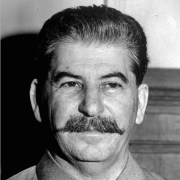
Wicked rulers.00733518.jpg
What is the curse?

LORD, destroy their power and get rid of them.

Application

We all know dictators that it would be good to curse in this way even now never mind Genghis Khan, Hitler, Stalin, Pol Phot and the list of other despots that there have been through the ages.  The amount of misery such men can inflict makes these curses wholly appropriate.

Psalm 59

What is wrong?

The author is under attack from a group of men who besiege him and are out to slander and kill him (probably Saul’s men according to the heading).

What is the curse?

LORD, punish them, show no mercy, but don’t just kill them, make them wander about and let them be caught first and then consume them in wrath and destroy them utterly.  I don’t know why David said not to just kill them, he could have saved himself many years of running around the mountains.

Application

I don’t think many of us have human enemies of the sort David did at the time he wrote this psalm but it can happen.  David had a long on-going battle with Saul and his forces – perhaps we need to be careful how we curse!!!

Psalm 69

What is wrong?

The author is in despair because as he seeks the Lord people begin to hate him without reason, scorn him and alienate him – including his own family members.  When people insult God he feels it personally (v. 9).  Scorn has broken his heart and left him helpless and there is no one to comfort him, in fact they do the opposite.

What is the curse?

May the table set before them become a snare;
may it become retribution and a trap.
23 May their eyes be darkened so they cannot see,
and their backs be bent forever.
24 Pour out your wrath on them;
let your fierce anger overtake them.
25 May their place be deserted;
let there be no one to dwell in their tents.
26 For they persecute those you wound
and talk about the pain of those you hurt.
27 Charge them with crime upon crime;
do not let them share in your salvation.
28 May they be blotted out of the book of life
and not be listed with the righteous.

Application

This psalm is full of prophetic statements that the NT writers use in relation to the life and death of Jesus. In John 15:25, the Lord quoted Psalm 69:4 in reference to His mistreatment by the Jews, “They hated Me without cause.”  The Apostle Paul quotes verses 22 and 23 in Romans 11:9-10.  The first part of verse 9 is fulfilled when the Lord cast the money changers out of the Temple (John 2:17).  The last part is quoted in Romans 15:3.

Yikes!

A Christian in a relationship